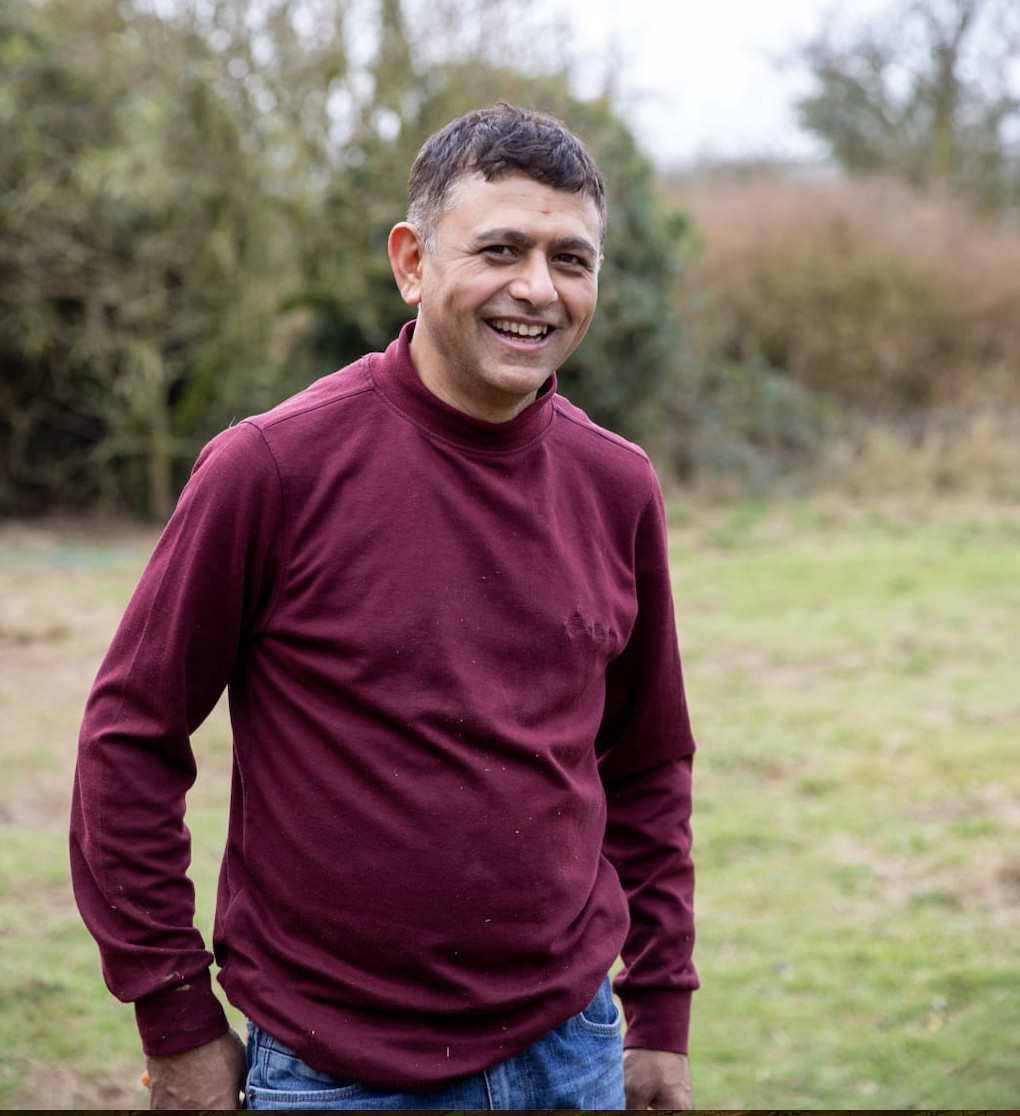
There are many stories emerging from Nepal right now, and all of them are overwhelming. But there is one we hadn’t reported until now — one that keeps reminding us that no matter how carefully you plan, life has its own plans.
It reached us through our newest recruit in Guwahati, a young man named Saptarshi. He called one evening, his voice a little shaky, to say he couldn’t focus on work. He had just learned that his uncle was among those missing from Rasuwa.
That uncle is Pankaj Naug, 50, who hasn’t been heard from since the morning of August 26. He had just cleared immigration at the Rasuwagadhi border crossing when the flood came. His story is one of thousands unfolding along that stretch of river right now — but to his family, he isn’t a number.
He is the man who called his seven-year-old son in London the evening before — from Sonam Guest House, his place of stay some 1.7 km from the Rasuwagadhi–Gyirong checkpoint — and told him to order a pizza. He is the man who, a few hours later, called his father in Guwahati’s Rukminigaon and said he’d had dinner and was ‘going out for a walk.’ Small, ordinary words — the kind his family now hopes to hear again, in his own voice, very soon.
That walk was the beginning of a pilgrimage Pankaj had been planning for years — the Kailash Mansarovar yatra. He had flown into Kathmandu on August 23, booked through Kathmandu Holiday Tours and Travels, thrilled that a long-held dream was finally happening.
He even video-called his parents to show them the hills of Tibet rising around him. It was, his family later said, “a ray of hope.” Within a day, that hope would curdle into confusion, and then into dread.
On the morning of August 26, at around 8:15, Pankaj had his passport stamped and boarded a bus with his guide. He was waiting for a fellow pilgrim to join them — an ordinary delay, the kind that means nothing until it means everything.
Less than an hour later, at around 9 a.m. Nepal time, CCTV cameras near the immigration office at Rasuwagadhi captured the unthinkable. The building and everything around it was overwhlemed by floodwater within seconds.
The flood had begun twenty minutes earlier, 20 kilometres upstream, when a snow and ice landslide on the Tibetan side sent a wall of debris crashing into the Lhende Khola and down into the Bhotekoshi River. From there it tore through Rasuwagadhi, Timure and Syabrubesi before pouring into the Trishuli River.
It left devastation across Rasuwa, Nuwakot, Dhading, Gorkha and Chitwan. A week ago, Pankaj’s family had never had reason to know these names. Now they trace them obsessively on maps, hoping the geography might tell them something the silent phone can’t.
His mother believes her son is somewhere on the parikrama around Mount Kailash, simply out of signal range, and that he will call any day now. It is, perhaps, the only story that lets her sleep.
His seven-year-old son is possibly too young to fully understand what’s happening. His wife, Monica, spends her days refreshing every website, every official update she can find. Between London and Guwahati, a family is holding onto the same thin hope from two different time zones.
Pankaj’s cousin, Shekhar Nag, has been the one keeping everyone updated — and he admits there isn’t much to share. The family has stayed in touch with Nepal Police, but the only resource offered so far is an app showing photographs of unidentified remains: limbs, torsos, faces that are no longer faces.
“How does one identify anyone from such pictures,” Shekhar asked, his voice caught somewhere between grief and disbelief. Still, he says, the family remains hopeful that Pankaj will be found safe. Hope, at this point, is the only thing they have left to hold.
They have also reached out to members of the Isha Foundation, some of whom had crossed into Tibet just before the disaster struck. An 80-member group linked to the foundation — 77 pilgrims, three volunteers and a replacement doctor — is separately reported missing, a reminder that Pankaj’s story is only one thread in a much larger tragedy.
Born in Shillong’s Keating Road and raised in Arunachal Pradesh, where his father Himanshu Ranjan Naug once worked, Pankaj studied civil engineering before building a career first in Mumbai and then in London. He settled there in 2001 and took up British citizenship, carrying a British passport, number 124570170.
He made regular trips home to Guwahati — his last visit only a few months ago. His name now appears on a list of twelve people from Assam reported missing in Rasuwa.
The numbers around him have only grown heavier. As on August 29, Nepal’s National Disaster Risk Reduction and Management Authority had recorded 669 bodies recovered and 2,326 people still missing across the affected districts — 562 of them in Rasuwa alone.
Chitwan has reported the highest toll so far, 233 recovered, followed by 158 in Purba Nawalparasi and smaller numbers scattered across Nuwakot, Gorkha, Dhading, Tanahun and Rasuwa itself. Among the missing are 933 hydropower workers and dozens of security personnel — 45 from the Army, 27 from the Police, 13 from the Armed Police Force.
Alongside them are 517 foreign nationals and 127 Nepalis returning from abroad whose whereabouts remain unknown — each one, somewhere, a family like Pankaj’s.
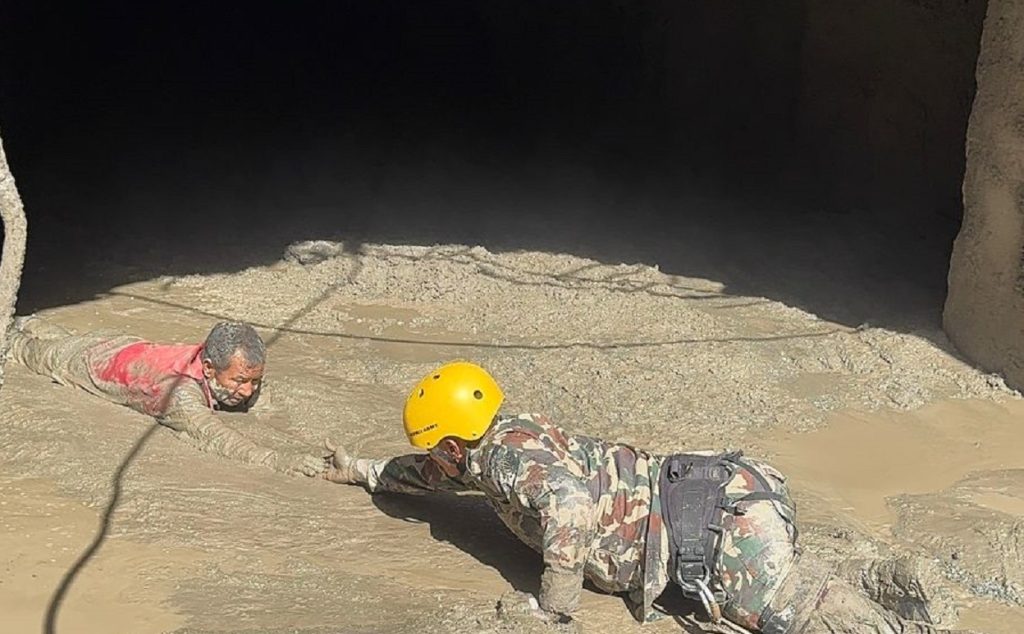
There is some comfort in the rescue numbers, even if it hasn’t reached Pankaj’s family yet. More than 4,451 people have been pulled out alive, including 191 rescued from a hydropower tunnel and 517 airlifted to safety in a single day, as over fifteen thousand police, army and armed police personnel comb through what’s left of the disaster zone.
For the Naug family, none of that is comfort until it has a name attached to it. They plan to wait one more day before deciding whether to travel to Bidur in Nuwakot, and possibly push further toward Rasuwa as the waters recede and rough routes begin to reopen.
Pankaj’s wife and young son plan to be in Guwahati soon, choosing to wait together with the rest of the family rather than apart. It has been, as Shekhar put it, “very disturbing and tense” — the kind of waiting that has no clock and no map.
Somewhere in that silence is a father who once told his son, quite simply, to order a pizza — because he was just going out for a walk. It’s an ordinary sentence his family now carries carefully, waiting for it to be followed by another.