For decades, the people living in the border areas of Block I and Block II have endured uncertainty over their administrative status, access to government services, and even their identity documents.
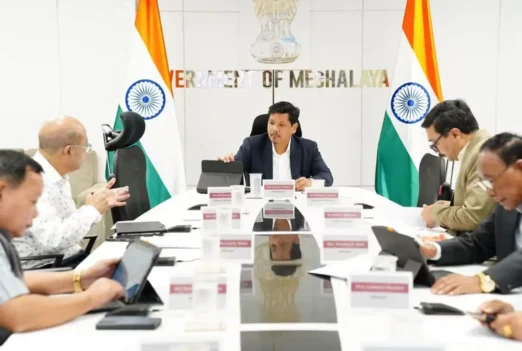
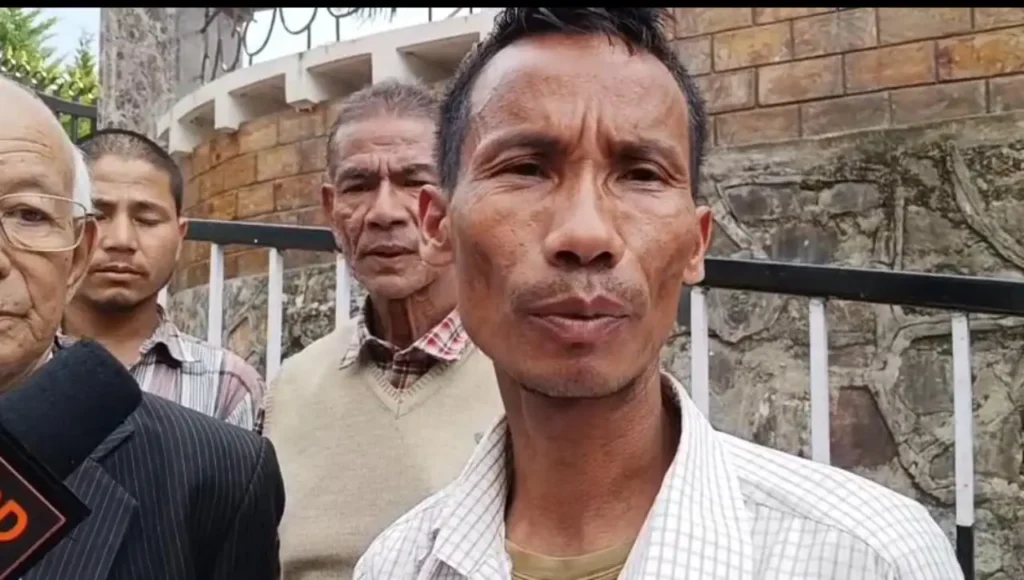
Determined to bring their concerns directly to the state government, members of the Hynniewtrep Border Dispute Redressal Forum recently met Meghalaya Chief Minister Conrad K Sangma and submitted a memorandum highlighting the hardships faced by residents living in the disputed areas.
The delegation raised concerns over the continued lack of recognition for villages under Elaka Labangnongphyllut and the difficulties faced by residents of Lapangap, particularly in carrying out farming and cultivation activities.
According to the forum, the meeting was not merely about administrative recognition. It was about securing the rights, dignity and future of thousands of border residents who continue to live without access to basic government services and benefits.
Representatives of the forum said they urged the Chief Minister to grant recognition to all villages under Elaka Labangnongphyllut in line with the revival of the traditional elaka by the Jaintia Hills Autonomous District Council (JHADC).
The District Council has already issued a sanad to Acting Daloi Prince Maiang. Sanads have also been issued to village headmen, while official notifications have been published confirming recognition of the elaka and its traditional administrative structure.
Despite these developments, the forum expressed concern that the Meghalaya Government has yet to formally recognize the villages falling within the elaka.
The delegation pointed out that villages in Block II had received recognition from the Meghalaya Government as early as 2004. As a result, residents were able to obtain Electoral Photo Identity Cards (EPIC), access government schemes and receive various developmental benefits.
However, many villages in Block I continue to remain outside the state’s administrative framework.
According to the forum, this has created significant hardships for residents who still struggle to obtain essential documents such as EPICs, birth certificates and Scheduled Tribe certificates.
Without these documents, many people face challenges in accessing educational opportunities, government welfare schemes, employment benefits and other public services.
To address these issues, the memorandum urged the state government to formally bring all villages under Elaka Labangnongphyllut within Meghalaya’s administrative system.
The forum argued that recognition would enable residents to obtain necessary documents from the state government while also ensuring that the villages are included under various departments and development programmes.
The delegation also highlighted the difficulties faced by farmers in Lapangap.
Agriculture remains the primary source of livelihood for many families in the area. However, uncertainties arising from the boundary dispute continue to affect farming and cultivation activities, creating concerns over livelihoods and economic security.
Forum members stressed that protecting traditional land rights and ensuring unhindered access to agricultural land are essential for the well-being of border communities.
While raising these concerns, the delegation also expressed gratitude to the JHADC for taking steps to support residents.
According to the forum, the Executive Committee of the District Council has decided to issue landholding certificates and pattas to residents, allowing them to formally register their land documents.
The decision has been welcomed by residents as an important step towards securing land ownership and protecting traditional land rights.
However, the forum maintained that recognition by the District Council alone is not sufficient.
Since the JHADC has already recognized Elaka Labangnongphyllut and restored its traditional administrative structure, the state government must now extend formal recognition to the elaka and all villages under its jurisdiction, they said.
The discussion also focused on the broader Meghalaya-Assam boundary dispute, which has remained unresolved for decades.
During the meeting, the Chief Minister informed the delegation that the Assam Government is expected to appoint a chairman for its Regional Committee, paving the way for further discussions on the boundary issue.
The forum welcomed the prospect of renewed dialogue but emphasized that discussions concerning Block I must take into account the 1958 notification, which they described as the foundation of the dispute.
The delegation further reminded the Chief Minister that the concerns surrounding Block I and Block II are rooted in history and cannot be viewed in isolation.
They referred to the joint demarcation exercise conducted in 1957 by the then Mikir Cachar Hills District Council and the United Khasi-Jaintia Hills authorities.
According to the forum, officials involved in the exercise visited villages, examined local customs and traditions, studied the languages spoken by residents and documented the socio-cultural identity of communities living in the area.
The findings, they said, showed that many villages in Block I were predominantly inhabited by Khasi-Pnar and other Hynniewtrep communities.
The forum argued that these historical records remain important in understanding the cultural, traditional and administrative ties of the area with Meghalaya.
The delegation therefore reiterated that no part of Block I or Block II should be ceded to Assam.
According to the forum, the issue is not merely about territory but about safeguarding the identity, history and customary rights of indigenous communities who have lived in these areas for generations.
The Chief Minister, they said, assured them that Meghalaya’s interests would not be compromised and that the concerns raised by border residents would continue to receive attention.
At the same time, the forum cautioned that if discussions between the two states fail to produce a satisfactory outcome, legal avenues may have to be explored.
For the people living in the border villages, the meeting represented more than a routine interaction with the government.
It reflected a continuing struggle for recognition, access to essential services, development and protection of their identity.
As Meghalaya and Assam continue efforts to resolve their long-standing boundary dispute, the voices from Block I and Block II serve as a reminder that behind every negotiation are communities seeking security, recognition and a future free from uncertainty.
For the Hynniewtrep Border Dispute Redressal Forum, the message delivered to the Meghalaya Government was clear — the aspirations of border residents for recognition, development and justice must remain at the centre of any lasting solution.