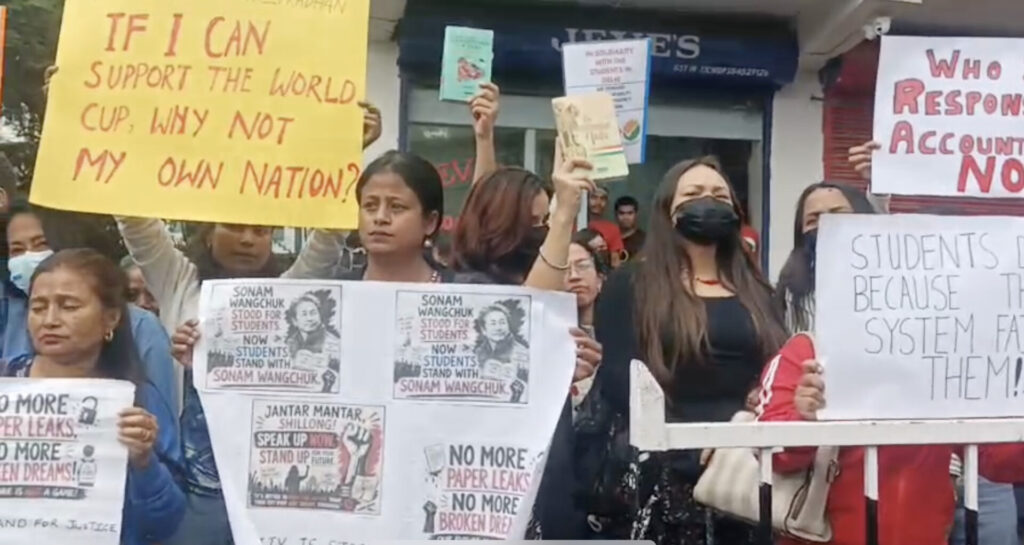
Few would have imagined that a protest which began at Jantar Mantar in New Delhi would so quickly find an echo in Shillong. Yet on Monday, the movement demanding reform of India’s examination system travelled more than 2,000 kilometres to Meghalaya’s capital, signalling that what began as a protest in the national capital is steadily becoming a nationwide call for change.
That the movement has reached Shillong says something significant. A city with its own long history of issue-based public mobilisations has now rallied around the future of students, with citizens making it clear that the crisis surrounding competitive examinations is not confined to Delhi or a handful of states. It is a concern that resonates just as deeply in the Northeast.
In a show of solidarity with education reform activist Sonam Wangchuk and the Cockroach Janata Party’s (CJP) ongoing protest at Jantar Mantar, students, medical professionals, concerned citizens, and political figures gathered to demand accountability, transparency, and sweeping reforms to India’s education system.
The peaceful agitation reflected a growing wave of public anger over systemic failures in India’s national examination framework. Student activists, medical professionals, concerned citizens, and political representatives came together to demand sweeping reforms, greater institutional transparency, and accountability at the highest levels.
Speakers throughout the demonstration argued that repeated examination scandals, paper leaks, and administrative failures have imposed an enormous psychological, emotional, and financial burden on students and their families. They stressed that the issue extends far beyond isolated irregularities, striking at the very trust that millions of young people place in the country’s education system.
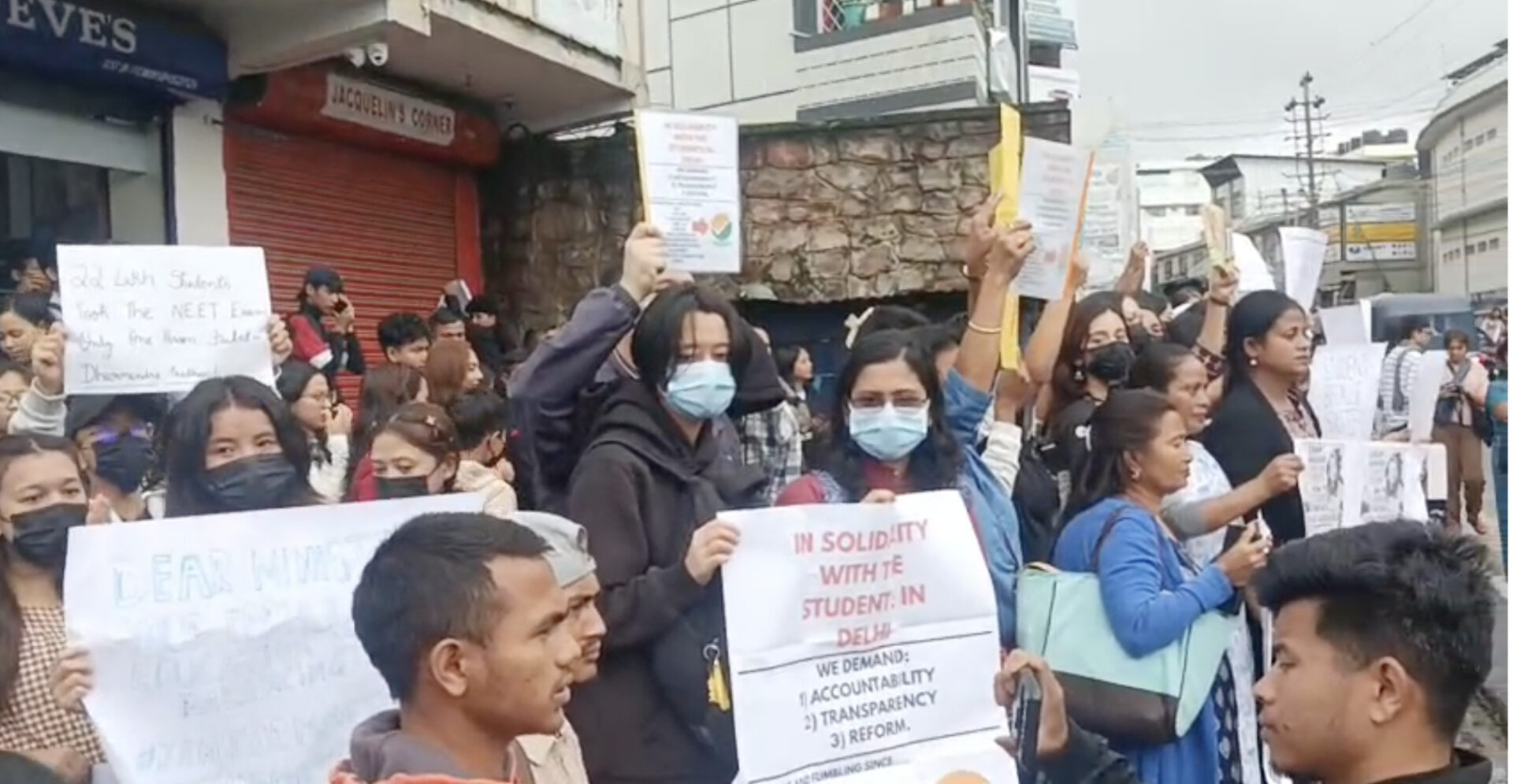
Protesters pointed out that years of rigorous preparation, immense personal sacrifice, and substantial financial investment by parents are repeatedly undermined whenever high-stakes national examinations become embroiled in controversy.
Addressing the gathering, Dr. Suhana, a practicing medical doctor who successfully cleared the National Eligibility cum Entrance Test (NEET), offered a deeply personal perspective on the pressures confronting aspirants. Drawing on her own experience of navigating one of India’s most competitive examinations, she described the immense mental strain imposed on candidates who are forced to face re-examinations or prolonged administrative uncertainty.
Dr. Suhana lamented that the government’s lack of responsiveness has driven several distressed candidates to take their own lives. She also strongly criticised what she described as the high-handed handling of peaceful dissent, characterising the removal and treatment of Sonam Wangchuk from Jantar Mantar as unethical and unacceptable. Joining other protesters, she called for both Union Education Minister Dharmendra Pradhan and Prime Minister Narendra Modi to step down.
Echoing these concerns, local citizen Anchal Gurung criticised what she described as a flawed educational administrative system that has allowed NEET paper leaks to recur unchecked. She directly linked recent student tragedies to these institutional failures.
Gurung questioned the continued silence of the country’s top leadership, asking why Union Education Minister Dharmendra Pradhan had not resigned and why Prime Minister Modi had remained silent on an issue affecting millions of young people. She also described the removal of Sonam Wangchuk from Jantar Mantar as deeply unethical and argued that resignations at the highest levels were necessary to begin restoring public confidence in the education system.
The demonstration also received political support when Manuel Badwar, Secretary of the Meghalaya Pradesh Congress Committee (MPCC), joined the silent protest organised by students at Don Bosco Square, Laitumkhrah.
Clarifying that he and fellow leaders were attending in their individual capacities as concerned citizens rather than under a formal party banner, Badwar said the gathering reflected the growing frustration of young people whose futures were being jeopardised by what he described as the central government’s negligence.
The young leader cautioned authorities against dismissing the movement as a minor grievance. He said that when government policies begin to toy with the aspirations of young people, they inevitably create widespread despair. He further argued that the administration’s reluctance to provide clear answers to protesting candidates reflected a worrying disregard for the country’s educational priorities.
Calling for urgent and comprehensive reforms, the MPCC Secretary warned that failing to rebuild the country’s education system would risk creating lost generations while weakening the intellectual capital essential for India’s future. He urged citizens from all walks of life, along with opposition parties across the country, to stand in solidarity with the youth in their demand for justice, transparency, and structural reform.
It remains to be seen whether Meghalaya’s influential student organisations, including the Khasi Students’ Union (KSU), and other groups that have traditionally spearheaded public movements in the state will now join the campaign. However, Monday’s gathering suggested that the concerns surrounding India’s education system are no longer viewed as distant events unfolding in New Delhi.
For many in Shillong, the message was simple: the future of students in Meghalaya and across the Northeast is inseparable from the future of students elsewhere in the country. If Monday’s gathering is any indication, the call that began at Jantar Mantar is steadily reaching every corner of India, reminding the nation that the aspirations of its students cannot be treated as a regional issue but as a national responsibility.