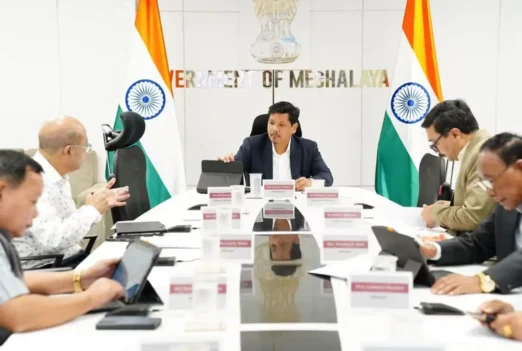
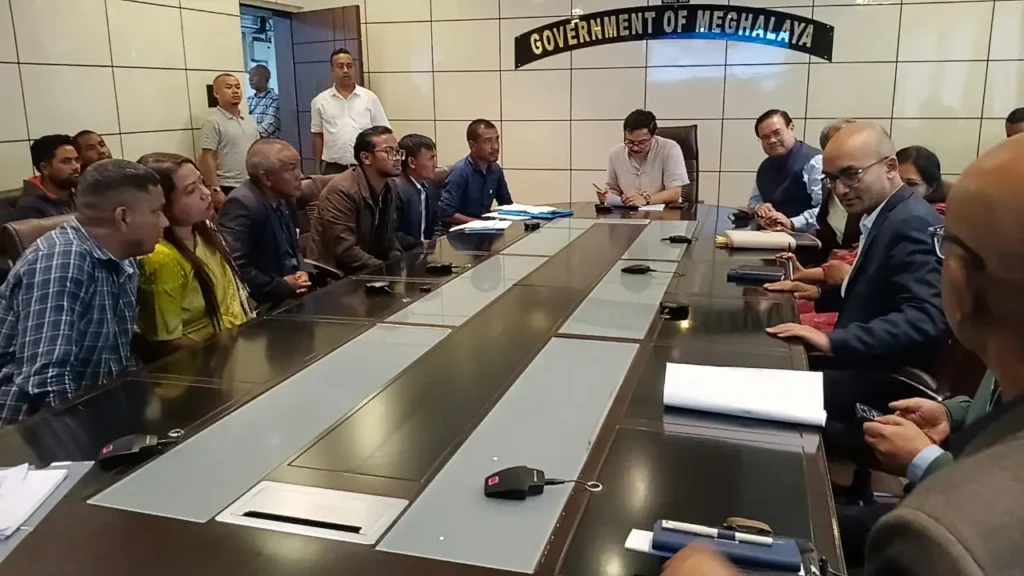
The Jaintia Coal Owners, Miners, Suppliers and Workers Association (JCOMSWA) has defiantly resolved to continue its grueling hunger strike. The protest has now stretched into its 17th consecutive day after high-stakes talks between association members and State Chief Secretary Shakil P. Ahamed ended in a complete deadlock, leaving the miners dissatisfied with the government’s proposals.
Despite the prevailing tension, the meeting did yield a few significant, albeit temporary, concessions.
Providing details of the discussion, Information Secretary Overcome Dkhar revealed that the government has agreed to constitute a joint Mining Committee. The committee, comprising the Deputy Commissioner of East Jaintia Hills and members of the association, will be tasked with drafting a new Small-Scale Mining Policy.
In a major immediate victory for the protestors, the government has also agreed to suspend the transportation and entry of coal from outside the state. The suspension will remain in effect until retired Chief Justice B.P. Katakey makes his anticipated visit to the East Jaintia Hills region on June 29, 2026.
Furthermore, authorities highlighted the availability of the Meghalaya Environment Protection and Restoration Fund (MEPRF) scheme under the Deputy Commissioner’s office to assist those financially affected by the mining ban. The government also pledged to engage with the Jaintia Hills Autonomous District Council (JHADC) to draft underground mineral laws.
Yet these assurances were not enough to break the impasse.
The government maintained that it cannot make final decisions on the association’s major demands without consulting Justice Katakey, who is scheduled to visit Jaintia Hills on June 29. As the legal team and the Mining Department have left the final verdict pending until after this judicial visit, the association has vowed to continue its agitation.
Adding to the emotional weight of the protest, JCOMSWA president Marshall S.B. Biam was admitted to Woodland Hospital in Jowai on June 16, 2026, after his health deteriorated. He had been on an indefinite hunger strike since June 1, demanding that the government allow coal-mining activities to resume in the district.
The transfer to the hospital was fully accepted by JCOMSWA members and his family, who accompanied him for treatment. The association has made no allegations against anyone regarding his hospitalization.
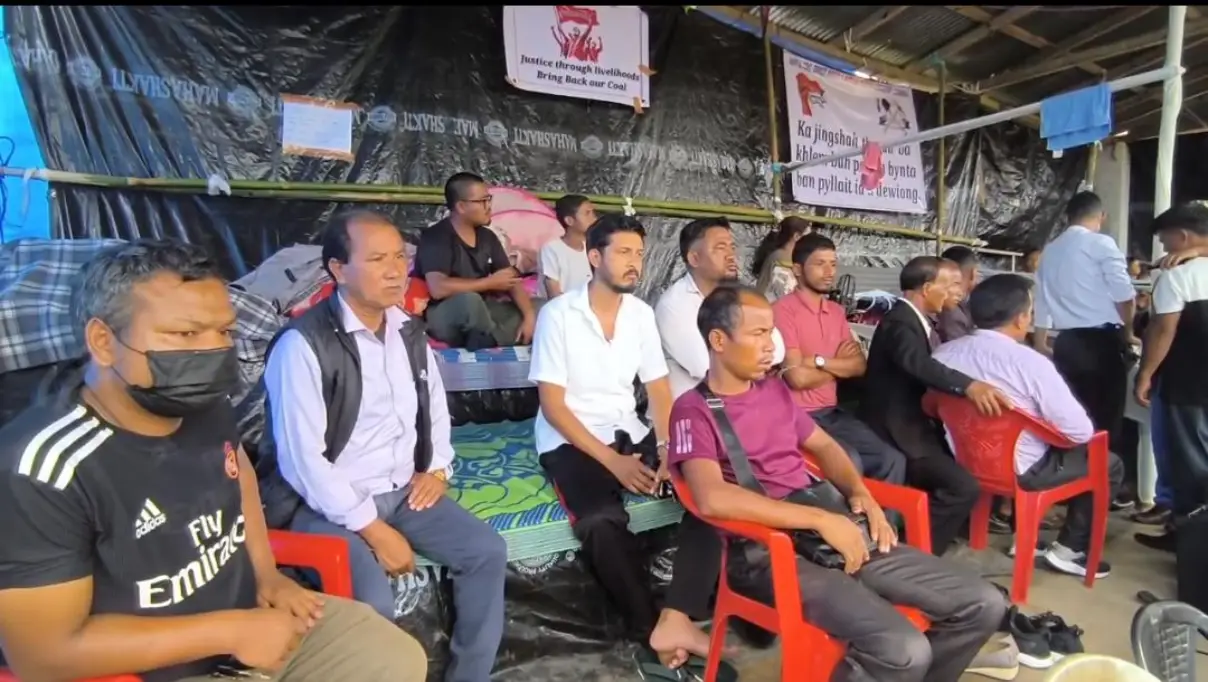
However, the medical emergency has not weakened the movement.
Instead of ending the hunger strike, JCOMSWA nominated Jesper Thoo of Rymbai village, an association member, to continue the fast in place of the hospitalized president. Members remain steadfast, declaring that the hunger strike will continue until the Chief Justice arrives and a concrete agreement is reached, as miners continue to demand the lifting of the coal mining ban.
Elaborating on the association’s core grievances, Wanshwa Nongtdu explained that while the delegation successfully submitted its memorandum and secured an audience with the Chief Secretary, the central issue remains unresolved.
According to Nongtdu, the government’s scientific mining policy contains a major requirement mandating a minimum of 100 hectares of land for legal mining operations. JCOMSWA is demanding a substantial reduction in this requirement, arguing that the 100-hectare threshold is impossible for most local residents to meet.
Nongtdu further pointed out that miners in Meghalaya often have to dig to depths ranging from 100 to 200 metres to reach coal seams. Implementing scientific mining protocols across such vast areas would require investments running into crores of rupees, making compliance financially unviable for local stakeholders.
The association noted that coal mining in the region began in 1984 and continued without major disruptions for nearly three decades until the National Green Tribunal (NGT) imposed a ban in 2014.
Maintaining that traditional mining did not create major problems, the association highlighted the severe economic hardship and livelihood losses that local communities have endured since the ban came into force.
The meeting ultimately ended in a stalemate.
JCOMSWA delegates walked away dissatisfied, reiterating that the government had failed to address the most critical points of their agenda. The association has vowed to continue its agitation until the government delivers a fully approved and practical Small-Scale Mining Plan that addresses the concerns of local miners and stakeholders.