The rain has hardly stopped for days. Footpaths have dissolved into slippery trails, streams have swollen and steep hillsides have become treacherous to climb. In villages tucked away across Mawsynram, Sohra and other remote corners of Meghalaya, reaching a single household can take hours.
Yet every morning, Block Level Officers (BLOs), carrying bundles of enumeration forms, set out once again. Their destination is not merely a village, but every eligible voter living there.
Sometimes, however, reaching the doorstep is only half the task.
Many houses remain locked during the day as farmers are away in the fields and office-goers have left for work. In several instances, BLOs have had to return six or seven times before finally finding someone at home. Elsewhere, elderly residents and women living alone have hesitated to open their doors to unfamiliar faces, unsure whether to trust those introducing themselves as election officials.
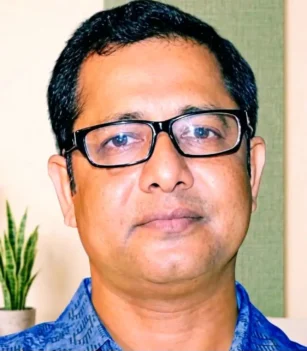
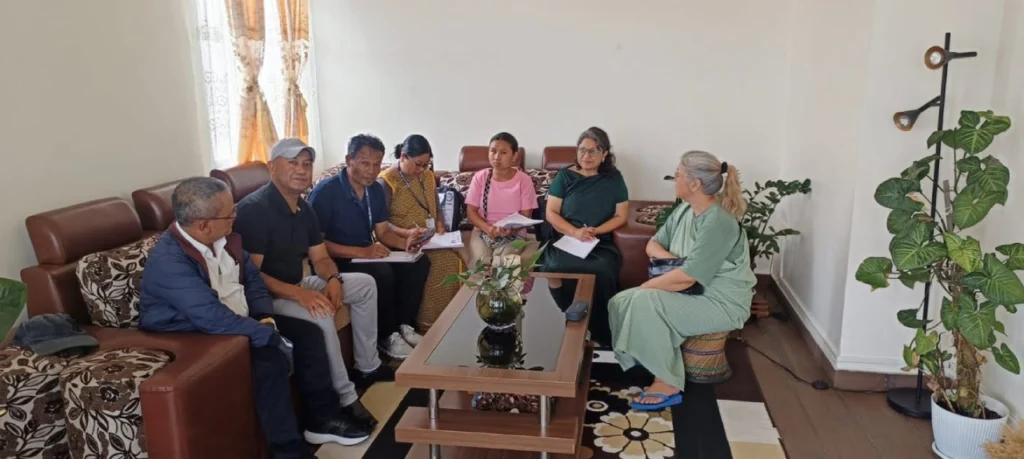
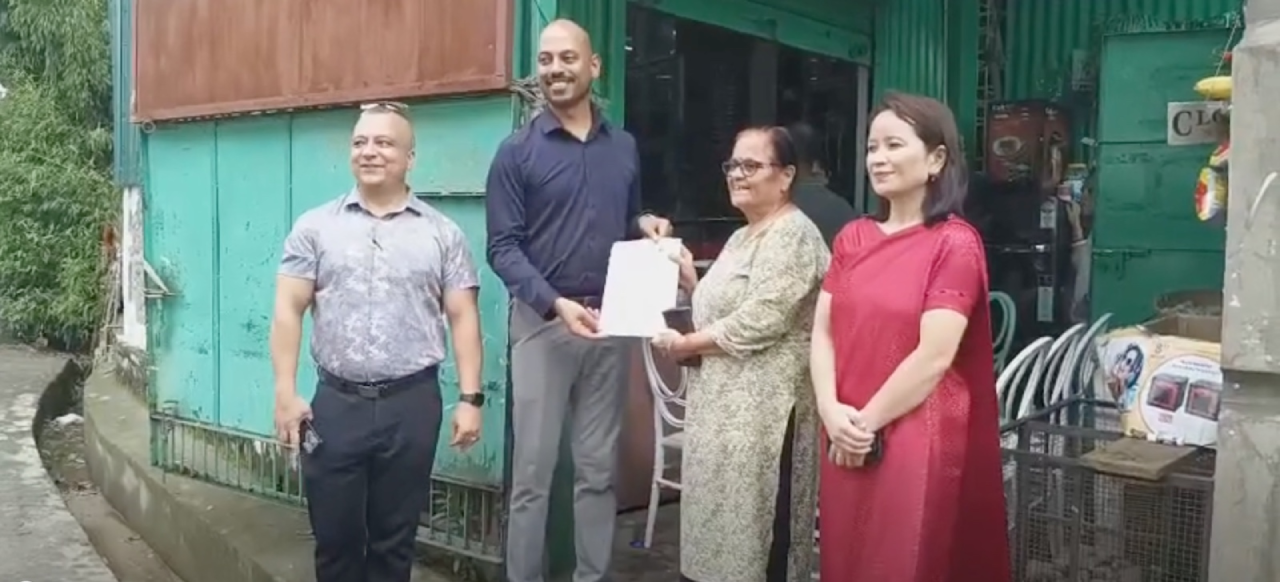
Chief Electoral Officer Dr. B. D. R. Tiwari himself encountered a similar situation during one of his field visits in Shillong, when he accompanied Deputy Electoral Officers and BLOs on door-to-door verification. The experience, officials say, reflects the practical challenges involved in ensuring that every voter is contacted personally.
It is against this backdrop that Meghalaya’s Special Intensive Revision (SIR) of the electoral roll enters its final day of enumeration on Wednesday, July 29.
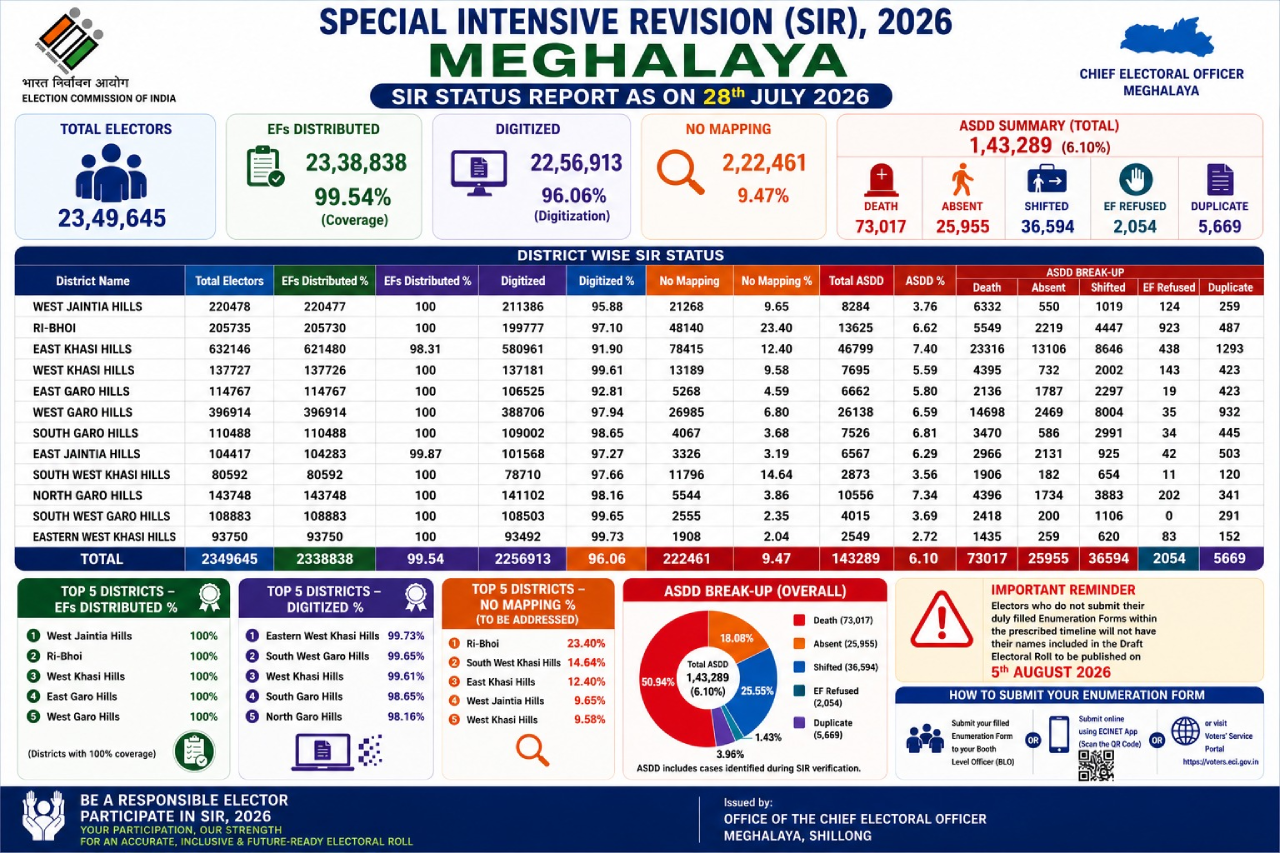
The exercise has already covered nearly 99 per cent of voters across the State, with 99.54 per cent of enumeration forms distributed. Election officials expect the final number of enrolled voters to exceed those who figured in the 2005 electoral roll, although a sizeable migratory population is yet to be traced and enumerated. So far, 2,054 voters have refused to enumerate themselves.
Beyond the statistics, however, Meghalaya’s story has been one of trying to ensure that the exercise is carried out in an atmosphere free from fear and anxiety over exclusion.
Much of the credit, officials say, belongs to the BLOs who have balanced their regular duties while tirelessly ensuring that every household is reached and every eligible voter gets an opportunity to be included.
As one BLO summed it up, “it’s been a crazy hectic time, but it was worth it as there is so much to learn and the satisfaction is to be able to ensure that voters don’t feel left out of the exercise.”
He was confident that most people would eventually find a place in the draft electoral roll, even if their names did not appear in the 2005 list.
The field work has been relentless.
“We are doing ground verification of the electoral roll by visiting door to door,” said a senior officer of the election administration in the State.
According to the officer, no complaints have been received so far, while the digitisation process is steadily gathering pace.
Although the outcome will become clearer only after the draft electoral roll is published on August 5, senior election officials remain confident that every genuine voter will be covered.
A senior officer closely involved in the exercise said, “this is a process to include people, and therefore we have so many steps, so there is no reason to fear.”
The reassurance assumes significance in the backdrop of developments in West Bengal, where cases of “logical discrepancies” generated anxiety among several Indian citizens who claimed they had been left out of the electoral rolls despite possessing documents establishing their citizenship.
Responding to those concerns, the officer said, “here we are ensuring that the process would be fine.”
According to the official, Meghalaya’s close-knit social structure has considerably strengthened the exercise. Assistance from traditional institutions such as local Dorbars (traditional councils), political parties and community members has made it easier to identify residents and ensure that very few people are left behind.
Migration, however, remains one of the biggest hurdles.
Many residents have shifted to different districts, while others have moved outside the State or even abroad. Tracing them has often required repeated visits to the same homes.
“Many people are not in their residences but we have gone there as many as 7-8 times,” said one BLO from the Shillong East Constituency, requesting anonymity.
“We are trying to ensure that we can reach out to as many people and even if they have shifted residences, we can find them, so that they are not disenfranchised,” the BLO added.
Chief Electoral Officer Dr. B. D. R. Tiwari said similar efforts are continuing across Meghalaya.
“People who have moved out, our BLOs are tracing them with best of our efforts,” he said.
“There is no fear factor at all in Meghalaya as far as we are concerned,” he added.
In a recent exclusive conversation with The Borderlens, Dr. Tiwari said, “if people are not satisfied and for some reason their names don’t appear in the list, they can file an appeal with the EROs and if not satisfied then second level appeal can be filed with the CEOs, it’s a quasi-judicial process.”
The election authorities have also identified specific categories that require additional attention.
Police personnel who are frequently transferred between districts often change residences, making them difficult to trace. Officials said regular planning meetings are being held to ensure such voters are not missed.
Officials insist that the process has remained transparent throughout. “Process is happening very transparently and all opportunities have bene given to all electors. The forms can be filled up and submitted to the BLO or submitted online,” election officials added.
The Election Commission has also created multiple safeguards for those whose names may not appear in the 2005 electoral roll.
Officials clarified that if an individual’s name is absent from the 2005 list and the names of the person’s parents are also unavailable, the applicant can still register by producing any of the 13 documents notified by the Election Commission of India (ECI).
Special provisions also exist for exceptional situations. Elderly citizens who are unable to attend hearings personally, students studying outside the State and others facing genuine difficulties may receive exemptions based on the merits of their cases.
“Any family member, like an elderly person’s children can represent them,” informed Dr. Tiwari.
Dr. Tiwari explained the process in detail.
“People should not be worried. If their names are not there in the previous SIR, then they can give the names of the parents or grandparents and if that is also not available, then they can fill entire details related to himself or herself, at the time of hearing during claim and objection they have to produce out of 13 documents, only that with Aadhar which is document number 12, they have to produce another supporting document, then their name will remain in the electoral roll.”
Another senior official, who has been closely involved in the exercise since its inception, pointed out that among the documents, school certificates or matriculation certificates showing that a person was born before 1987 and was residing in Meghalaya could prove particularly significant.
“This is one document that should be given lots of precedence,” the official said.
The extent of the effort undertaken by election officials is reflected in the distribution figures across the State. In East Khasi Hills, 98.31 per cent of enumeration forms have been distributed, while the remaining 1.69 per cent largely comprises people believed to have migrated. Similarly, in East Jaintia Hills, around 0.13 per cent of the electorate remains to be covered.
Dr. Tiwari said local Dorbars (traditional councils), neighbours and community leaders are assisting officials in tracing these individuals.
The results are already visible. West Jaintia Hills, Ri Bhoi, West Khasi Hills, East Garo Hills, West Garo Hills, South Garo Hills and North Garo Hills have achieved 100 per cent distribution of enumeration forms.
The five districts recording the highest levels of digitisation are Eastern West Khasi Hills, South West Garo Hills, West Khasi Hills, South Garo Hills and North Garo Hills.
Even so, officials acknowledge that the remaining cases are among the most challenging, largely involving people who have migrated, shifted residence or could not be contacted despite repeated visits by BLOs. Another challenge lies in cases where family linkages have not been mapped, parents are registered in different constituencies, or priests and nuns are enrolled separately from their families.
As many as 1,43,289 voters, or 6.10 per cent of the electorate, currently remain outside the active list. These include 73,017 deceased voters, 25,955 absent voters, 36,594 people who have shifted from their registered residences, 2,054 individuals who refused enumeration and 5,669 duplicate entries.
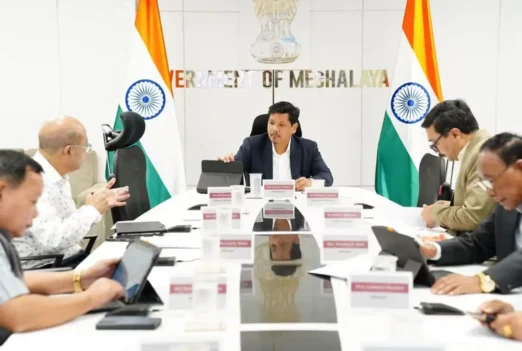
As the enumeration exercise concludes on July 29, officials will move to the next stage of scrutiny before the draft electoral roll is published on August 5. But for Meghalaya’s BLOs, the story has already been written on rain-soaked hillsides, muddy footpaths and the countless doors they kept returning to until someone finally answered.