Are we allowing a disaster to build up beneath the hills of Meghalaya—quite literally?
The question is difficult to avoid as protests intensify in Jaintia Hills against the proposed Shree Cement project, reviving a controversy that has followed cement-led industrialisation in the region for more than two decades.
What began as opposition to another cement plant has now become a larger argument over the limits of development, the carrying capacity of the hills and whether an ecosystem that has taken thousands, even millions, of years to evolve can survive relentless extraction.
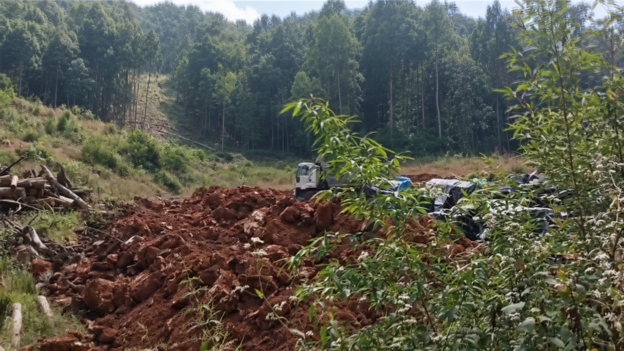
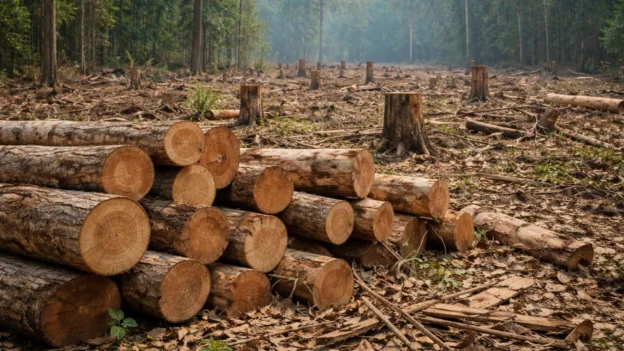
East Jaintia Hills already has eight to nine operating cement plants, concentrated largely around Lumshnong. Environmentalists say the cumulative pressure is already visible in disappearing cave habitats, deforestation, soil erosion and growing water stress.
In Lumshnong, drinking-water shortages have become acute as primary aquifers disappear. The concern is not only what is being extracted today, but what will remain after the limestone is gone.
It is against this backdrop that the proposed Shree Cement project has generated such strong opposition.
The project in the Daistong area has been described as more than ten times the size of existing facilities. Its proposed operations would involve stripping hills, river valleys or pynthor, and extensive limestone deposits near the Lynteit river—close to the globally significant Krem Liatprah cave system.
The protests have brought together several organisations. On August 17, the Jaintia National Council, Jaintia Students’ Union (JSU), Khasi Students’ Union (KSU), Hima Sutnga Youth Federation and Federation of Khasi Jaiñtia and Garo People held a sit-in at Khliehriat against the July 31 public hearing for the Shree Cement project.
They demanded cancellation of the hearing and settlement of the rights and claims of traditional landowners and farmers before the project proceeds.
The KSU subsequently made the issue part of a wider charter of demands, alleging that people were prevented from participating properly in the public hearing and that environmental and stakeholder concerns had been disregarded.
Following talks with the Meghalaya government on August 26, the KSU suspended its agitation after receiving assurances. The government agreed to constitute an independent fact-finding committee and said work related to Shree Cement would remain on hold pending the inquiry.
The issue then moved to the Meghalaya High Court after the JSU filed a public interest litigation (PIL) challenging the July 31 environmental public hearing for the proposed limestone mining project at Lum Syrman, Elaka Nongkhlieh.
On September 7, the state government informed the Court that activities connected with the project would remain frozen pending an independent inquiry into its environmental, social, legal and criminal aspects.
But the present confrontation is only the latest chapter in a warning that goes back more than two decades.
In January 2005, cave specialist Brian Dremot Kharpran Daly, along with other environmentalists and speleologists, had already raised serious questions over the location of cement plants in Jaintia Hills.
Speaking to The Telegraph, Daly then he had warned about the consequences of allowing cement factories to operate close to caves, forests, human habitation and the underground systems of Jaintia Hills.
At the time, there were essentially two major cement units in the Lumshnong area—Meghalaya Cements Limited and Cement Manufacturing Company Limited. Environmentalists had pointed to the proximity of these projects to caves and important biodiversity areas, including the Narpuh forest reserve.
Daly’s warning was stark.
“Everything will go, the history, the distinctive cave life, the beautiful stalagmites which can tell you the history of the past climate dating back to over 100 years,” he told The Telegraph in 2005.
He was not arguing against development. Even then, Daly made that distinction clear.
He said he was “not against development plans”, but insisted on the need for “some checks and balances.” And he posed a question that has acquired an even greater urgency today:
“Do we have the right to destroy India’s longest caves, which have taken thousands of years to form.”
More than 20 years later, that question has returned with the proposed Shree Cement project.
And so have the warnings.
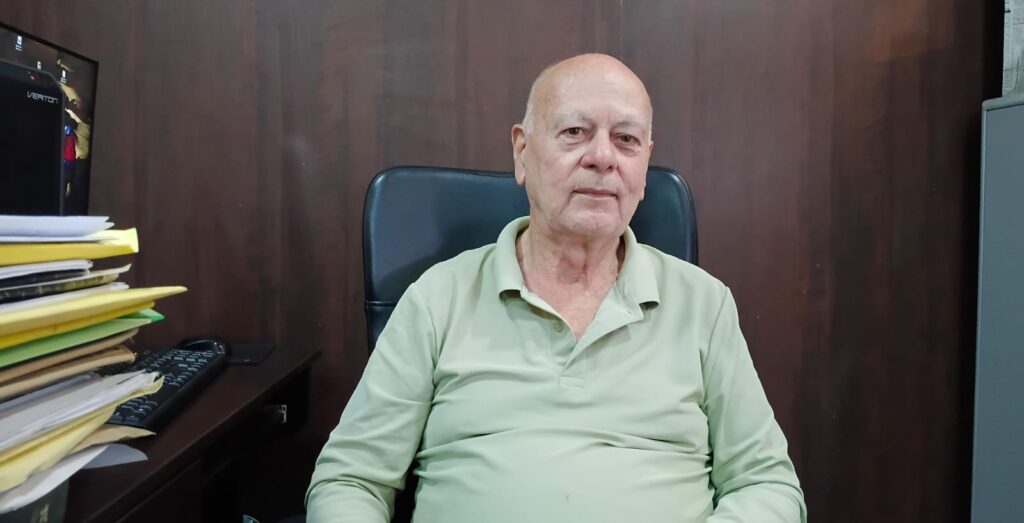
Daly, who has mapped numerous cave systems in Meghalaya with national and international cavers and has been recognised with the Tenzing Norgay National Adventure Award, has again warned about the rapid degradation of Meghalaya’s irreplaceable underground systems.
The warning is not simply about caves as geological formations. It is about the larger ecosystem they support.
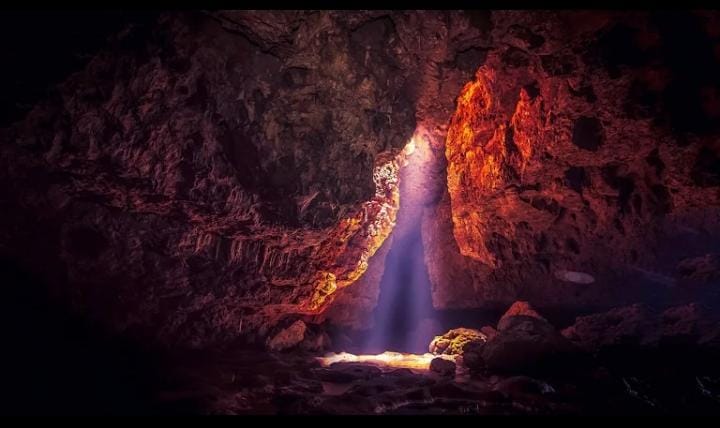
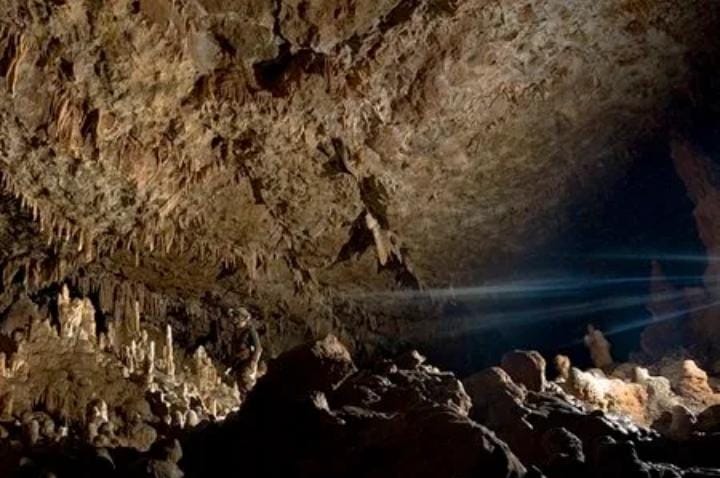
Krem Liatprah, measuring roughly 31 to 35 kilometres, is India’s longest cave system and connects seven distinct caves, including Krem Um-im, Krem Labit, Krem Rubong and Krem Umtler. Its underground passages support highly specialised subterranean species and form part of a complex hydrological system.
The thick limestone deposits of East Jaintia Hills have produced some of the most extensive interconnected cave networks on the continent.
These caves are not simply underground tourist attractions. They are scientific archives.
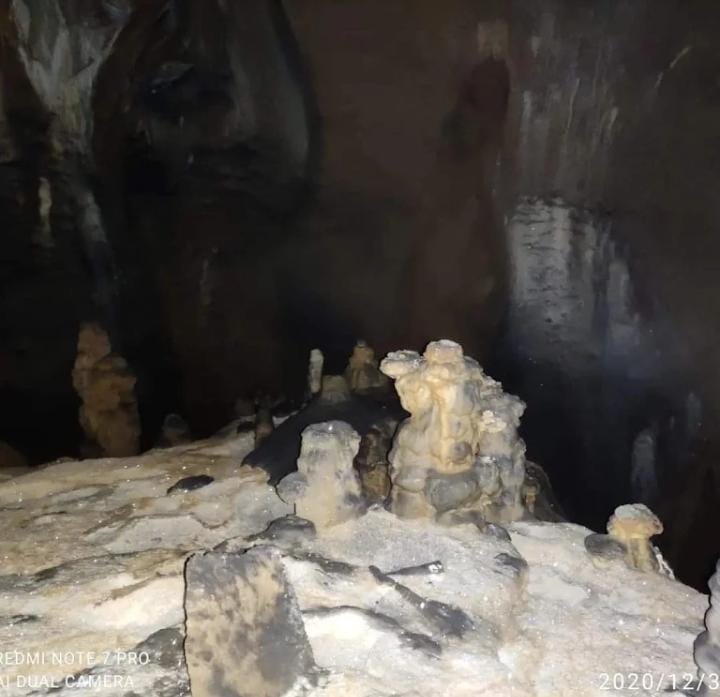
Their stalagmites preserve evidence of past climatic conditions and have contributed to scientific understanding associated with the Meghalayan Age. They also have significance for anthropology, palaeontology, biospeleology, hydrology and petrology.
For local communities, their significance is much older.
Caves have traditionally been associated with water, fishing, shelter and rock drawings, while stories surrounding places such as Krem Syndai and Krem Lynput remain part of local cultural memory.
The ecological significance of these underground worlds has even reached the highest levels of national leadership.
Prime Minister Narendra Modi, during Mann Ki Baat, highlighted Neolissochilus pnar, the world’s largest known subterranean blind cavefish, measuring 329.2 mm and discovered inside Krem Umladaw in East Jaintia Hills. He also acknowledged Daly’s conservation work and directed central ministries to initiate protection measures for the species.
But protecting the fish without protecting the landscape that sustains it presents an obvious contradiction.
Acidic discharge from coal mining can contaminate cave waters and threaten endemic subterranean species. Surface limestone mining, meanwhile, can alter or contaminate the underground inflow and outflow channels that sustain cave ecosystems and rivers such as the Leten.
Jaintia Hills has already seen what happens when such warnings are ignored.
In 1997, Daly petitioned the state government to stop limestone extraction on the ridge above Krem Mawmluh and recommended that mining be shifted elsewhere.
More than a decade later, in 2013–14, he inspected the site at the request of Vijay Kumar, then Managing Director of Mawmluh Cherra Cements Limited, and demonstrated the structural instability caused by heavy blasting.
The intervention did not come in time.
A year later, the main entrance passage of Krem Mawmluh collapsed, leaving a permanent crater. Blasting stopped only after MCCL halted its operations.
The significance of that collapse goes far beyond the cave itself.
Krem Mawmluh subsequently became associated with scientific evidence for the global Meghalayan Age. Had blasting continued, an internationally significant geological archive could have been destroyed.
This is why the distinction between a forest and a cave is important.
A forest can, at least theoretically, regenerate. A cave destroyed by blasting cannot. It is a non-renewable geological formation built over thousands of years.
The danger is compounded by what has already happened in the surrounding landscape.
Unregulated coal mining in areas such as Shnongrim has caused deforestation, wildlife loss and severe soil erosion, with sediment washing into and choking subterranean passages. Adding large-scale limestone extraction to an already stressed ecosystem, environmentalists argue, could push the damage beyond repair.
The question is also what happens when the limestone runs out.
Environmentalists warn that once reserves are exhausted—over a projected period of roughly 50 years—companies could eventually move on while communities are left with depleted water resources, degraded land and an impoverished landscape.
The expansion of mining into newer areas, including Brishyrnot, has already fuelled fears that the environmental footprint is moving beyond areas that have already been heavily impacted.
In his recent interview with The Borderlens, Daly has also questioned the language of “scientific mining”.
Removing the overburden to reach limestone, he argues, can leave vast, unfillable craters that may be more destructive than traditional rat-hole mining. He has pointed to the contrast with Odisha and Chhattisgarh, where cave systems only a few hundred metres long have received State Natural Heritage protection, while Meghalaya possesses cave systems extending for tens of kilometres without comparable recognition.
That contrast raises a larger question about what Meghalaya chooses to value.
The caves are among the state’s most extraordinary natural assets. Yet their protection remains difficult to reconcile with an industrial model that treats the limestone beneath them primarily as a mineral resource.
The present Shree Cement dispute therefore goes beyond one company or one public hearing.
It raises questions about whether environmental clearances adequately assess the cumulative impact of setting up exploitative industries on an underground landscape whose most important connections cannot be seen from the surface.
It raises questions about whether the carrying capacity of Jaintia Hills has already been exceeded—and whether the idea of development takes sufficient account of the communities, water systems, forests and biodiversity that will remain after the mineral is gone.
There are other possibilities.
Daly has advocated a differentiated approach to the caves themselves. Krem Mawsmai can be managed for public tourism with scientifically designed lighting and pathways; Krem Mawmluh can be preserved for adventure tourism under trained guides and proper safety arrangements; and the deepest and most fragile systems should remain restricted to scientific investigation.
Perhaps the same principle should apply to development above ground.
Not every limestone deposit has to become a mine. Not every mountain has to be blasted simply because the rock beneath it has commercial value.
The protests, the High Court intervention and the government’s decision to keep the Shree Cement project on hold have created a rare opportunity to step back and examine the cumulative cost of an exploitative industrial model that has already transformed parts of Jaintia Hills.
The warnings have been there since at least 2005.
The question now is whether Meghalaya will heed them before the next warning comes not from a cave explorer, an environmentalist or a court—but from the hills themselves.