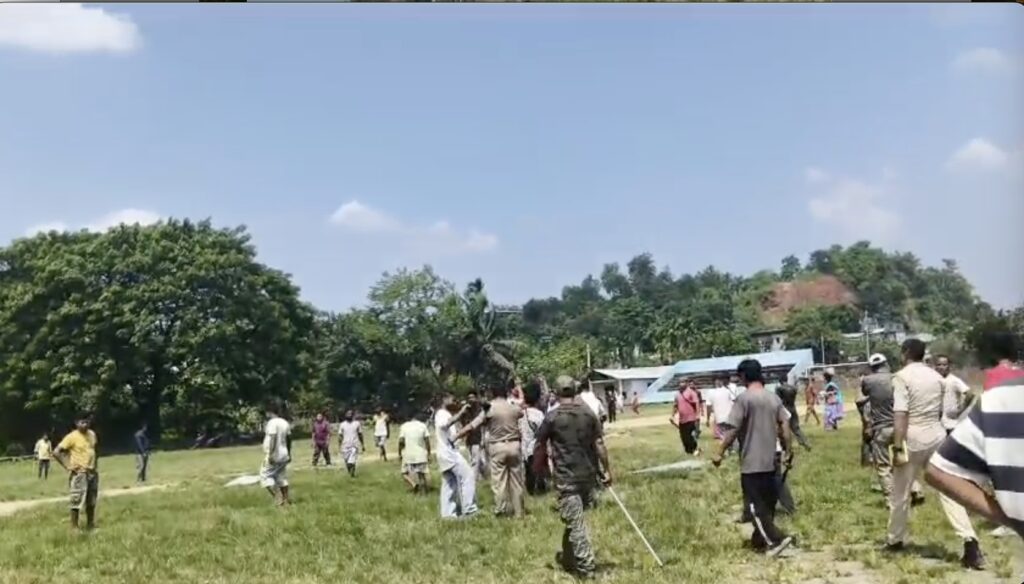
For over five decades, the border between Meghalaya and Assam has remained a persistent source of uncertainty, tension, and unrest for residents living in border regions.
While decades-old disputed areas like Langpih, Block I, and Block II continue to face friction, recent events show that even areas where boundary pacts have been officially signed are experiencing severe instability.
The growing turmoil in regions such as Maikhuli underscores a fundamental breakdown between formal government agreements signed on paper and the physical realities on the ground.
The Chairman of the Confederation of Meghalaya Social Organizations, Roykupar Symrem, expressed deep concern over the state of affairs, noting the embarrassment felt by citizens 54 years after Meghalaya achieved statehood without defined, demarcated borders.
Although boundary issues have persisted across every administration since 1972, the signing of the First Phase Memorandum of Understanding in 2022 by Meghalaya Chief Minister Conrad K. Sangma and Assam Chief Minister Himanta Biswa Sarma, in the presence of Union Home Minister Amit Shah, was intended to resolve six specific sectors.
However, rather than bringing clarity, the implementation of the agreement has created widespread confusion regarding exact territorial jurisdictions.
In the Pillangkata and Khanapara sector, which includes Maikhuli, the 2022 agreement allocated approximately 1.70 square kilometres to Assam, while Meghalaya received only 0.70 square kilometres.
This division has allowed individuals from Assam to exploit the lack of physical demarcation on the ground.
A prominent example involves a fishery pond in Maikhuli known locally to Meghalaya residents as Pungdohkha, which was developed through funding from Meghalaya’s Fisheries Department.
In the agreement documents, Assam identified a location called Murmari Bi, which was ceded to Assam. However, Murmari Bi actually lies further away from Maikhuli village.
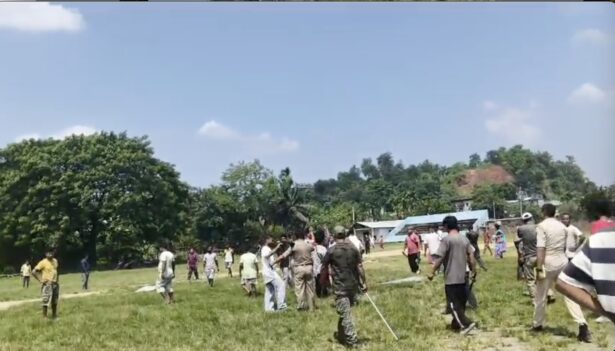
Authorities and residents from Assam have claimed that Pungdohkha is in fact Murmari Bi, using this interpretation to assert control over the local fishery pond, the public football ground, and nearby government primary schools.
Village leaders and residents strongly oppose these claims. They emphasise that while top leadership signed agreements on paper, the failure to physically map and erect clear boundary markers has allowed neighbouring authorities to encroach on established community assets.
The breakdown in security and territorial protection is equally evident in Mukroh, located in the West Jaintia Hills district.
The village previously suffered a tragic loss of life when local community members were killed in a shooting incident involving Assam forest guards.
Despite official records establishing that Mukroh lies within Meghalaya, Assam police and security personnel have continued to cross into the village with armed weaponry and assert jurisdictional control.
Although the Meghalaya government established a local police outpost in the region, local leadership criticises the administration for failing to empower these personnel to act effectively in defending border residents.
By constantly violating the agreed-upon status quo that prohibits unilateral actions and development disruptions, Assam authorities continue to expose the weakness of Meghalaya’s administrative presence on the ground.
Tensions have also escalated in the Langpih sector, where officials from Assam, accompanied by representatives from the Census Department of India, entered local villages to conduct census enumerations.
This move sparked intense opposition from local residents and regional organisations, who called on the state government to immediately halt Assam’s unilateral actions in disputed sectors like Langpih, Block I, and Block II.
While Chief Minister Conrad K. Sangma publicly stated that he would engage with his Assam counterpart if necessary, community leaders argue that passive responses are insufficient when outside authorities actively attempt to claim land and register residents.
Delaying strong administrative intervention poses a severe risk, as initial demographic surveys can later be used as official documentation during final boundary negotiations.
The political handling of the boundary issue has drawn sharp criticism from civil society organisations.
Prior to the 2023 state elections, the government formed Regional Committees and organised high-profile joint visits by both Chief Ministers to inspect border areas like Langpih.
However, progress stalled completely following the election under the pretext of awaiting administrative updates in Assam.
Despite the passage of several months and the presence of aligned political parties in Meghalaya, Assam, and at the central government level in New Delhi, active negotiations remain stagnant.
Critics argue that border issues are repeatedly politicised ahead of elections rather than resolved with genuine intent, leaving vulnerable border communities exposed to ongoing harassment and recurring violent incidents.
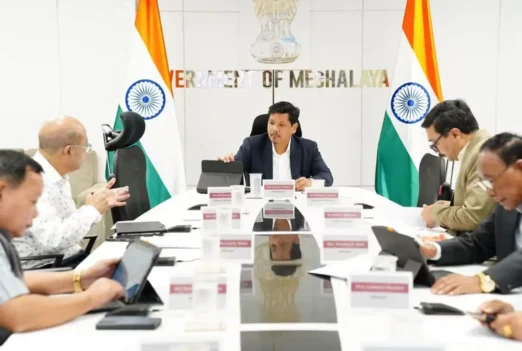
In response to the growing concerns, Chief Minister Conrad K. Sangma emphasised that the border dispute is a complex, 54-year-old historical issue inherited at statehood rather than a sudden development.
He explained that tensions and misunderstandings naturally arise in disputed areas, but affirmed that his administration maintains continuous communication and coordination with Assam officials at various administrative levels to normalise conditions.
While acknowledging that finding a permanent, mutually accepted resolution is extremely difficult—as evidenced by the inability of successive governments over five decades to settle the matter—he noted that progress has been achieved in select locations.
The Chief Minister reiterated that the state government will persist in seeking long-term solutions while prioritising local-level coordination to prevent escalation and maintain peace along the border.