The mist-covered slopes of Lum Shyllong have sustained generations of people, feeding streams, replenishing natural springs and nurturing forests that form an important part of Shillong’s ecological heritage. But a proposed ropeway project at Shillong Peak has raised concerns over the future of this fragile landscape, bringing into focus the growing conflict between tourism-driven development and environmental protection.
For residents living around the foothills, the controversy goes far beyond the construction of a tourist attraction. It concerns the future of their water sources, the survival of an increasingly vulnerable ecosystem and the protection of a mountain that holds deep cultural and spiritual significance for the Khasi people.
The proposed Shillong Peak Ropeway Project has now become the centre of an escalating confrontation between local communities and the Meghalaya Government, with residents questioning its environmental implications, the consultation process and the long-term consequences of increased tourist activity.
At the heart of the opposition is a fundamental concern: whether infrastructure development in an ecologically sensitive landscape can proceed without compromising the natural systems on which thousands of people depend.
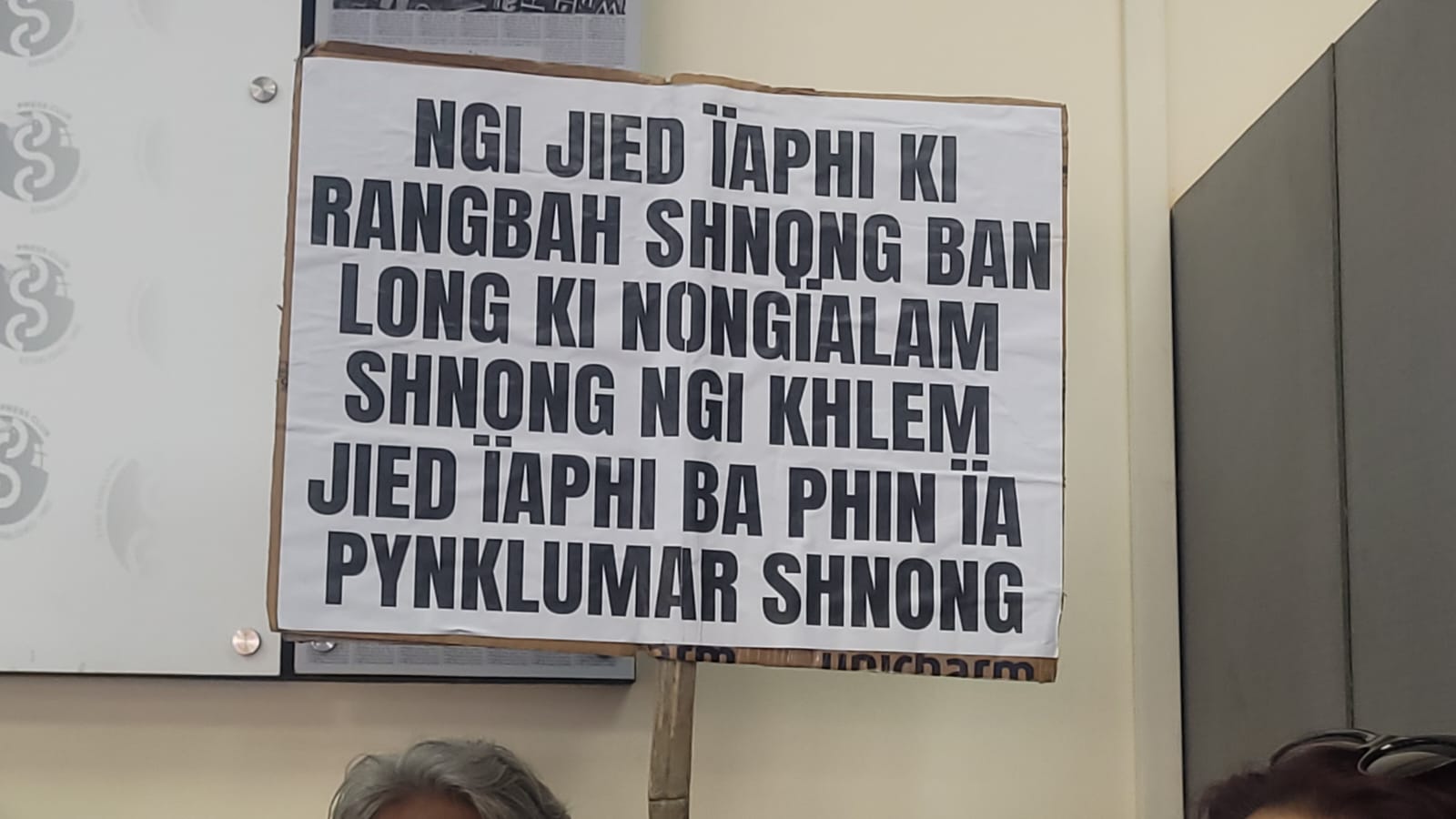
Residents of Laban Pyllun, under the banner of the Joint Action Committee (JAC) Against the Shillong Peak Ropeway Project, recently organised a protest march from Laban Last Stop towards the project site. The demonstration culminated in a public meeting where residents voiced strong opposition to the ongoing construction.
JAC Secretary Dr Linda Marbaniang issued a 10-day ultimatum to the state government, demanding that the project be scrapped or relocated.
She argued that the proposed ropeway offered little tangible socio-economic benefit to the surrounding communities while exposing them to potentially serious environmental consequences.
According to Marbaniang, the transformation of Shillong Peak into a major tourist destination could place additional pressure on an already fragile landscape. She questioned government assurances that the project would have no adverse environmental impact.
Her concerns reflect broader ecological changes being observed across Shillong, including declining rainfall, disappearing tree cover and the drying up of natural springs that have historically supplied water to local settlements.
The JAC also questioned a proposal seeking alternative land from the locality for compensatory afforestation. Marbaniang maintained that the community had no additional land available for such an exercise.
The opposition has also drawn attention to the manner in which the project was initiated.
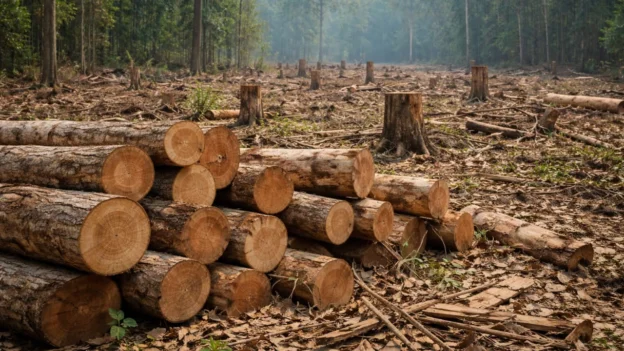
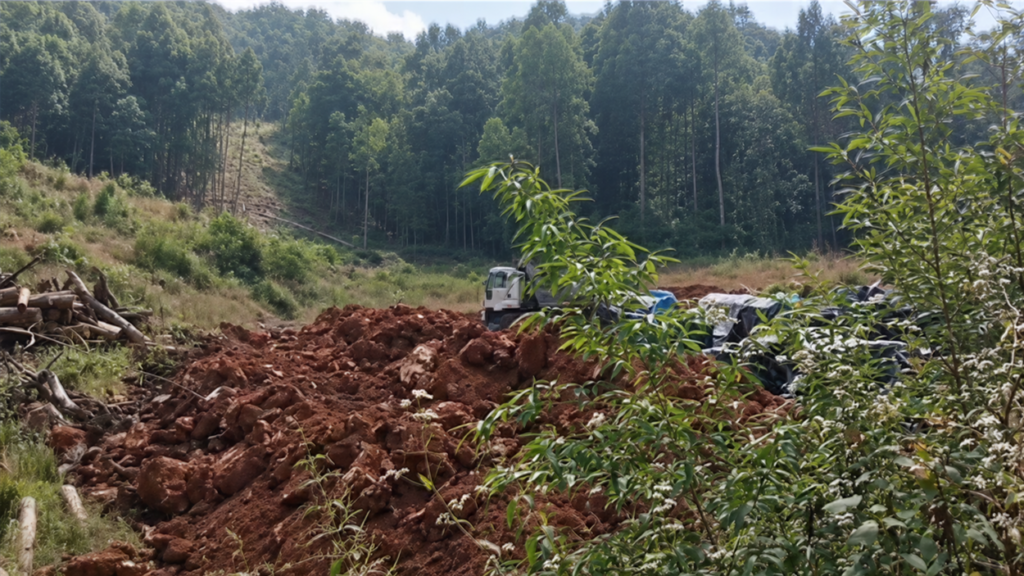
Marbaniang said residents were initially unaware of its implications because no meaningful public consultation had been undertaken. According to her, opposition intensified only after heavy machinery arrived and tree felling began.
Residents have linked these activities to water shortages experienced in the neighbourhood, although the precise relationship between construction and changes in water availability remains disputed.
The JAC maintained that its decision to organise protests followed a prolonged effort to obtain information through Right to Information applications and examine official project documents.
Marbaniang also alleged that construction was proceeding without certain mandatory No Objection Certificates and trading licences. She accused sections of the local Dorbar Shnong leadership of facilitating the project without adequately informing or consulting residents.
The committee has warned that failure to address its demands could lead to further agitation, including hunger strikes and possible legal proceedings before the Meghalaya High Court.
A mountain that sustains Shillong
Beyond the immediate controversy lies a much larger environmental question concerning Lum Shyllong and its role in sustaining the region’s water systems.
For generations, communities around Shillong Peak have depended on natural springs, streams and forest catchments originating in the surrounding hills. These water sources are also closely associated with the traditional relationship between Khasi communities and their natural environment.
During the public protests, residents recalled how earlier generations protected and managed these resources long before modern infrastructure transformed the landscape.
A woman from Madan Laban described the historical importance of the NanbahHon water source and the Wahumsohkhlur stream, which originates from Lum Shyllong.
She recalled a pond constructed during the British colonial period from which drinking water was channelled to nearby settlements through a system that continues to serve the community.
Other water bodies, including Rait Laban and the Wah Babon stream, were cited as examples of the natural network that has sustained the locality.
Residents pointed out that their forefathers had worked with the colonial administration to develop water supply arrangements while maintaining the surrounding natural environment.
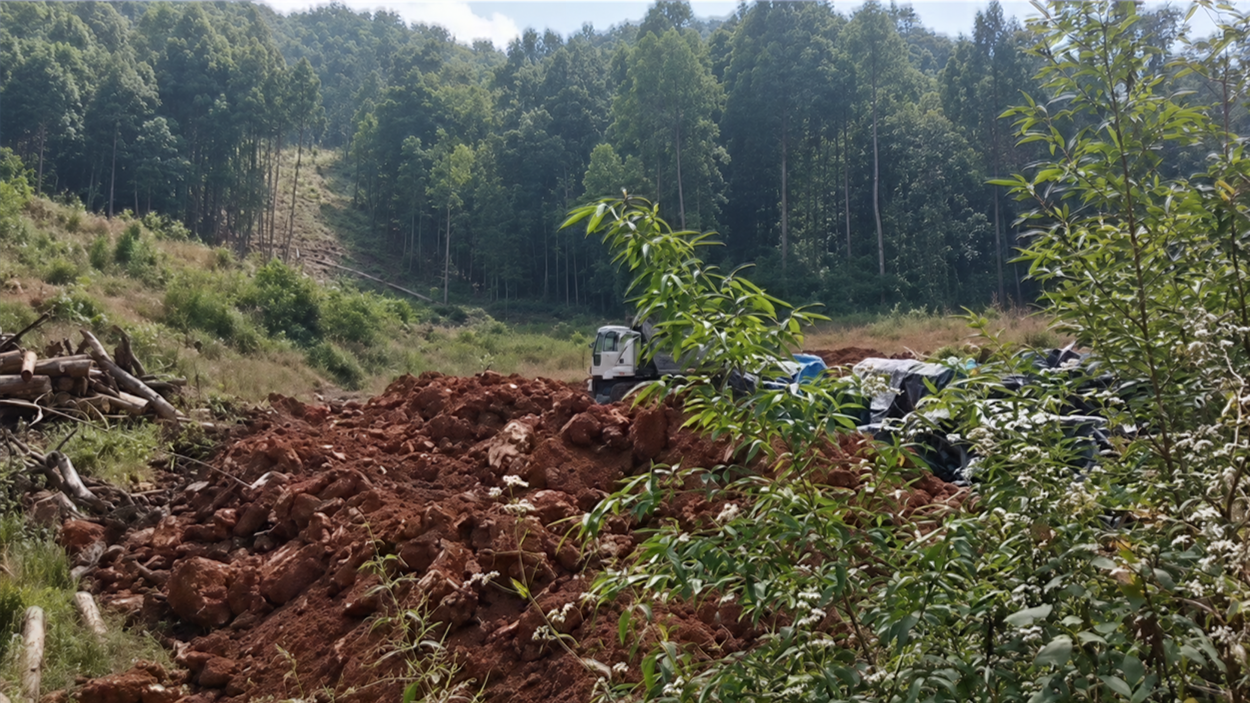
These accounts underline why the controversy cannot be viewed merely as resistance to a tourism project. For communities whose daily lives remain connected to these water sources, the perceived threat is to an entire ecological system.
A former Meghalaya Chief Secretary also drew attention to the importance of protecting the wider network of streams and rivers associated with Lum Shyllong.
He referred to the Umiew stream and the water system feeding the Mawphlang Dam, which supports the Greater Shillong Water Supply Scheme. The broader river network extends towards Shella and Bangladesh and contributes to water supply and hydroelectric generation.
He emphasised that earlier generations understood the importance of protecting forests and keeping water channels free from pollution, arguing that these values should be passed on to younger generations.
A resident of Malki similarly recalled a time when the surrounding forest canopy supported abundant wildlife and clear-running springs.
The Umrisa stream, once used for drinking, bathing and swimming, was cited as part of a landscape whose ecological richness has gradually come under pressure.
Residents also highlighted the significance of rivers and streams associated with the Shillong hills, including the Umiam, Risa, Umjasai, Umshyrpi and Umkhrah.
Although these water systems have distinct catchments and hydrological characteristics, the concerns raised reflect a wider fear that continued disturbance of the region’s forests and hill slopes could aggravate Shillong’s existing water crisis.
For a city already facing increasing pressure on its drinking water resources, the possibility of further ecological degradation is a concern that extends well beyond the immediate project area.
Public consultation becomes another flashpoint
The controversy intensified during an awareness meeting organised by the Tourism Department at the Shillong Convention Centre on 22 October.
What was intended as an opportunity for dialogue ended in a walkout by JAC members following disagreements over whether adequate public consultations had previously been conducted.
The immediate dispute arose when representatives of Laban Pyllun claimed that a formal public hearing on the ropeway project had taken place in 2022.
JAC representative Beni Mawlong rejected the claim, maintaining that no such hearing had been conducted.
He said that although authorities claimed notices had been sent to local dorbars, none of the seven dorbars in Laban had received the communications referred to during the meeting.

Mawlong also alleged that earlier requests for clarification from local leaders had gone unanswered.
He questioned how decisions concerning a major infrastructure project could have advanced without the knowledge of communities likely to experience its environmental and social consequences.
The committee further raised concerns about the exclusion of residents of Lawsohtun, situated at the foothills of Shillong Peak, from the consultation process.
For the protesters, the issue is not simply whether meetings were held or documents signed, but whether affected communities were adequately informed and given a meaningful opportunity to influence decisions.
The JAC reiterated its 10-day ultimatum and warned of stronger protests if its concerns remained unresolved.
Government maintains ropeway will protect the environment
The Meghalaya Government, however, has defended the project, maintaining that the proposed ropeway has been planned with environmental safeguards and the necessary statutory approvals.
Senior official CVD Diengdoh presented the government’s position during the stakeholder meeting attended by representatives of the Public Health Engineering Department, Shillong Municipal Board, Raid Laban Dorbar Pyllun and the JAC.
Using maps, watershed layouts and information on natural spring sources, Diengdoh sought to address concerns about possible disruption to local water systems.
He maintained that the ropeway towers had been positioned on ridge tops where no underlying water sources would be affected.
The government also argued that the Umiew catchment, which feeds the Greater Shillong Water Supply Scheme through the Mawphlang Dam, lies along a separate ridge and would not be disturbed by the project.
Diengdoh said the necessary clearances had been obtained from relevant authorities, including the Indian Air Force, the Army and the Raid Laban Dorbar.
He also referred to lease agreements and consultation exercises undertaken as part of the project’s planning process.
According to the government, public outreach began in 2021, while the foundation stone was laid in 2024. Officials maintained that the formal consultation process followed the Environment and Social Management Plan required for projects supported by the New Development Bank.
The Meghalaya Institute of Governance, working through local Rangbah Shnong and headmen, was involved in conducting these consultations.
Regarding land use, Diengdoh clarified that the upper terminal would be constructed below the Shillong Viewpoint on land transferred to the government by Raid Laban.
The lower terminal, he said, would occupy an existing Forest Department nursery subsequently handed over to the Tourism Department.
The government maintained that the project would not encroach upon the sacred forest sanctuary of Lum Shyllong.
Officials have presented the ropeway as an environmentally friendly alternative to the existing pattern of vehicular movement towards Shillong Peak.
The proposed monocable gondola system, designed to European SANS standards, would transport visitors from Madan Laban to the Shillong Viewpoint.
According to the government, restricting general vehicular traffic along the road circling Lum Shyllong and adjoining defence areas after the ropeway becomes operational could reduce emissions, littering, noise and other pressures associated with tourism.
The administration also expects the project to create employment and entrepreneurship opportunities for local residents, particularly vendors and young people.
Officials said joint site inspections had been conducted in August and expressed willingness to examine concerns raised during the stakeholder meeting.
The larger question of environmental accountability
The competing claims have exposed a deeper challenge confronting Shillong as tourism infrastructure expands into its surrounding hills.
While the government views the ropeway as an opportunity to promote sustainable tourism and reduce vehicular pollution, local communities fear that construction and increased tourist activity could permanently alter a sensitive mountain environment.
Both positions raise questions that require careful scientific examination rather than assurances alone.
The location of ropeway towers away from identified springs may reduce certain risks, but concerns about tree removal, surface runoff, soil disturbance, groundwater recharge and cumulative pressure on surrounding catchments remain important.
Equally, the environmental benefits claimed through reduced road traffic need to be assessed alongside the possible consequences of attracting larger numbers of visitors to Shillong Peak.
The distinction between avoiding direct construction within a sacred forest and protecting the wider ecological landscape is particularly significant.
Forests, springs and watersheds do not necessarily function according to administrative or project boundaries. Disturbance outside a protected area can still affect neighbouring ecosystems, depending on local geological and hydrological conditions.
This makes transparent environmental assessments, independently verifiable hydrological findings and meaningful public participation essential to establishing whether the proposed safeguards are adequate.
The dispute also highlights the importance of traditional ecological knowledge. Communities that have depended on local springs and streams for generations possess historical observations that can complement scientific studies and help identify environmental changes that might otherwise be overlooked.
The government’s development objectives and the community’s environmental concerns need not necessarily be irreconcilable. But any resolution will require credible evidence, openness about the project’s potential impacts and a consultation process that commands public confidence.
As the JAC’s ultimatum approaches its deadline, the future of the Shillong Peak Ropeway Project remains uncertain.
What is increasingly clear, however, is that the controversy has moved beyond the question of whether Shillong needs another tourist attraction.
It has become a test of how Meghalaya intends to protect the ecological foundations of its capital while pursuing economic development.
For Lum Shyllong, a mountain revered for its spiritual significance and valued for the forests and water systems associated with it, the stakes are particularly high.
The greater danger may not lie in a single ropeway project, but in the gradual acceptance of environmental disturbance as an unavoidable cost of development. Once the springs dry up and the forests disappear, the economic benefits of tourism may offer little consolation to the communities that have depended on them for generations.