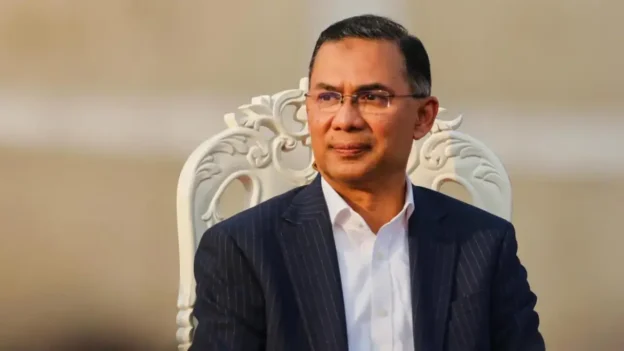
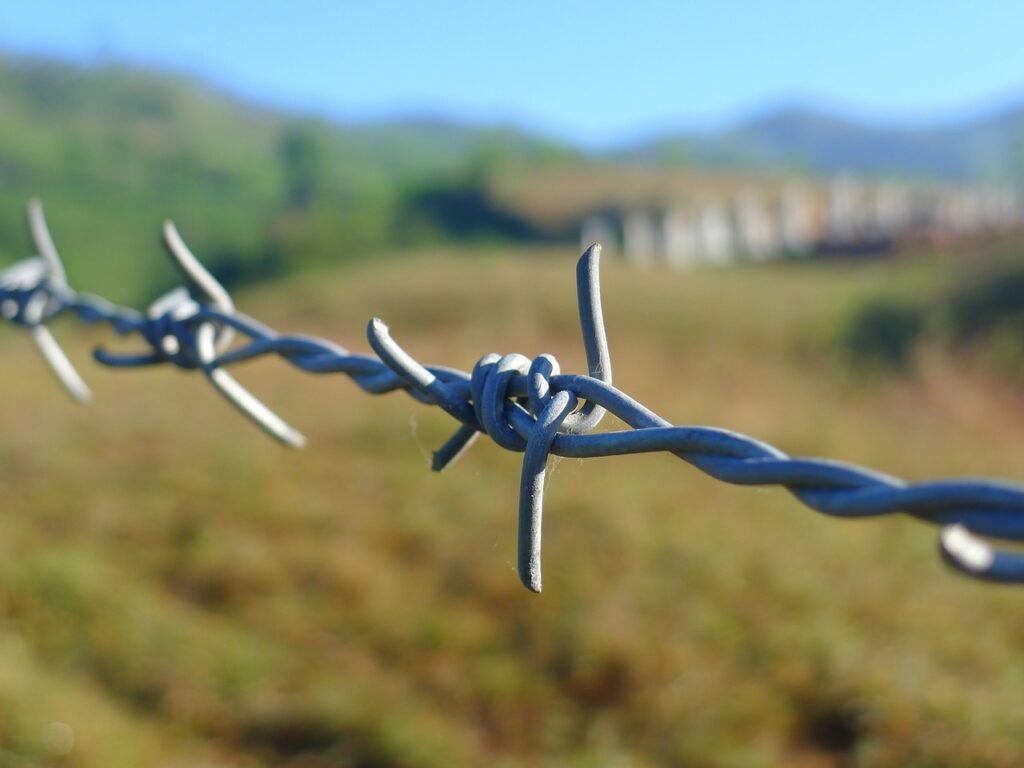
Union Home Affairs Minister Amit Shah announced that India would fence the Indo-Myanmar border (IMB) to curb and restrict the free movement of residents on both sides and finally end the Free Movement Regime (FMR). The proposition has been projected amidst the long-standing issue of ethnic conflict in the state of Manipur, increasing insurgent activities, and issues of illegal migration in other states of Northeast India. Speaking at an event, Shah emphasised, “Our porous border with Myanmar poses threats of insurgency, and the Narendra Modi government has decided to protect the India-Myanmar border by building a 300 km stretch of fence along the entire border area (with Myanmar), like that with Bangladesh.”
The statement came a day after 300 Myanmar soldiers fled their country into India’s territory in Mizoram seeking refuge from armed insurgencies against the Naypyidaw junta. However, seeking to fence the 1,643 km boundary overlooks the historical realities of borders as a lived, shared space.
What is the Free Movement Regime (FMR)?
FMR is a unique arrangement between the two neighbouring countries, India and Myanmar, that allows tribals in these border areas to enter each other’s territories without passports and permits.
Before India became independent, the movement of tribals across the Indo-Myanmar border held cultural and economic significance. Their affinity for similar cultural practices, enhanced by common lineages and shared cosmologies, enabled them to create affinal bonds, celebrate common festivals together, and practice trade. These 1,643 km-long borders of commonality, amplified by the Free Movement Regime, thus strengthened brotherhood and assimilation between the tribal communities.
Accordingly, on September 26, 1950, the Ministry of Home Affairs (MHA) published the Notification No. 4/15/50-F. It amended the Passport (Entry into India) Rules of 1950, whereby the ‘hill tribes’, who are either citizens of India or the Union of Burma and who are ordinarily residents in any area within 40 km (25 miles) on either side of the India-Burma frontier, were exempted from carrying a passport, visa and other travel documents while entering India.
Over the decades, these provisions were subsequently revised and reduced to 16 km on either side, down from 40 km. In addition, tribals were allowed to carry items equivalent to a headload. While the Government of India provisioned citizens of Myanmar to stay for 72 hours, the Myanmar government allowed only a 24-hour stay for Indians. This was further bolstered by the Act East Policy under the present BJP government in 2018. However, no bilateral agreement on regulating the movement of tribals was signed. At present, only a fraction, 10 km in the Moreh area in Manipur State on the border, remains fenced.
History and challenges of the Indo-Myanmar border (IMB)
The British East India Company and the King of Ava drew the first IMB on 24 February 1826 under the Treaty of Yandaboo, after the First Anglo-Burmese War. It remained a colonial legacy until 1969, when the Government of the Republic of India and the Union of Burma (now Myanmar) signed a boundary agreement.
The IMB runs through four northeastern states: Arunachal Pradesh (520 km), Nagaland (215 km), Manipur (398 km), and Mizoram (510 km). The border is manned by 186 Border Posts that stand in nearly impassable terrain. The complex topography has led to various challenges across the border. The challenging terrain and porous border make it difficult to completely fence the region. Some posts have also been dislocated from their original positions, leading to contested demarcations.
Issues along the IMB vary from state to state. On the southern side of the IMB (the trijunction of Mizoram in India, Myanmar, and Bangladesh), lack of infrastructure and poor connectivity has isolated the region from mainstream development in both countries. Today, it largely remains the most ‘underdeveloped region’ on the IMB. The IMB in Manipur is rife with smuggling and illegal trade and activities. The area is sparsely populated and remains underdeveloped as well. These activities restrict any developmental activities by the Government of India in the region. Finally, the IMB in Arunachal Pradesh, which is situated at the China-India-Myanmar trijunction, smuggles weapons and arms originating in China into India via Lohit. A lack of infrastructure and roads, along with unregulated movement on the IMB, has further deteriorated the border areas.
Insurgent groups operating in India’s Northeast, such as the United National Liberation Front (UNLF), People’s Liberation Army (PLA), and National Socialist Council of Nagaland (NSCN), take shelter, erect camps, obtain arms, train cadres and engage in smuggling and illegal activities to raise funds. Their association with the ethnic armies of Myanmar allows frequent misuse of the Free Movement Regime.
Border trade along the IMB remains informal. Although Land Customs Stations (LCS) have been established on the Indian side of the border for trade, these stations are largely unregulated, leading to increased smuggling of weapons and arms. China-made goods of poor quality also flow in large quantities and often go unchecked. Consequently, Myanmar’s exports to India largely outweigh India’s exports to Myanmar.
What triggered the reconsideration of FMR?
On May 3, 2023, Manipur broke out into an ethnic conflict between the majority Meitei and tribal Kuki-Zo communities, and it is still ongoing. Over the past decade, the Manipur government has expressed concerns over the “influx” of illegal migrants from Myanmar into Manipur, causing tensions in the state. The Manipur government also suggested a state-wide “National Registry of Citizens” on similar lines as that of the Assam-NCR. Subsequently, the idea garnered attention as Myanmar nationals entered Indian soil taking refuge and escaping the civil war back in their country.
Eventually, in September 2023, Manipur Chief Minister Nongthombam Biren Singh accused the illegal migrants from Myanmar of ethnic violence and misusing the Free Movement Regime. The Chief Minister urged the Centre to end the FMR, openly linking the state’s internal crisis to the porous border. The petition sought to formally abrogate the FMR, which had already been suspended on 1 April 2020 during the COVID-19 lockdown and further extended after the military coup in Myanmar in February 2021.
This statement by the Manipur Chief Minister angered the Kuki-Zo community, and they have accused the Chief Minister of stigmatising their community as “illegal migrants” and “narco-terrorists” to justify their “ethnic cleansing”. However, the Meitei-dominated regions of Manipur extended support to fencing the Indo-Myanmar border and conducting the National Register of Citizens (NRC).
Other border states on FMR
Mizoram has expressed dismay over the Centre’s decision to fence the border with Myanmar. Mizoram Chief Minister Lalduhoma informed External Affairs Minister S Jaishankar at a meeting that any move to fence the Indo-Myanmar border is “unacceptable” for the Mizos. In another meeting with Prime Minister Narendra Modi, Lalduhoma expressed that the Indo-Myanmar boundary on the Mizoram side was demarcated by the British without the consent of the affected people. The Chief Minister said it will continue to provide refuge to people from Myanmar fleeing the junta’s violence as they share ancestral and cultural ties, an official statement stated.
Nagaland Deputy Chief Minister Y Patton said Nagaland will discuss the Centre’s decision to fence the border with Myanmar with other Northeast states. Besides the state’s inputs on the FRM, it will also strive to better regulate the Indo-Myanmar border, taking into account both national security and the emotions of people living in the border areas.
On January 28, a tribal organisation in Manipur’s Churachandpur district declared its opposition to the Centre’s decision to fence the border, citing irreversible fracture of tribal history. The Indigenous Tribal Leaders Forum (ITLF) conveyed this stance during a public consultation in the district headquarters town on Saturday.
Living in borders
Borders are created for administrative convenience. They do not account for the social realities that pervade hill regions in everyday life. The current Indo-Myanmar Border remains a colonial legacy, a remnant of the past that separated communities of the same ethnic group and created two different nationalities and two nations without ensuring cognisance of the people affected.
In Manipur, where the IMB runs through Moreh, the border divides people and houses of the same community. In the Mon district of Nagaland, the IMB passes through the village Angh (chief) house, splitting it in two halves. One of the many reasons for questioning the practicality of a fenced border.
For people living on the borders, cross-border mobility is a daily requirement. Villagers on both sides of the border enjoy dual residency and are entitled to move freely. FMR has also enabled locals from Myanmar to travel to India for better education opportunities, trade, and medical facilities. People on the border share common festivals, establish affinal relations, and own properties on either side of the border. These relations are therefore emotional, systemic, and effective and are the bedrock of everyday survival. Therefore, fencing borders destabilises kinship and is unjust to the people involved. And if at all, global experience suggests that fenced borders rarely stop illicit trade and instead foster the creation of sophisticated and more complex networks of organised crime.
Given these impacts on people living on the border, dismissals by Indian states, and the effect of reconsidering FRM on India’s relation with Myanmar, the Centre will have to be cautious not to move hastily. In her critique of 21st–century border politics, political theorist Wendy Brown remarks that fenced borders are signs of waning sovereignty. That is, states display more symbols of force the more a state’s sovereignty is threatened. Therefore, although these serve as a self-defence mechanism, they are built around fragile egos rooted in national and religious identities, as borders reaffirm the state’s territorial authority and control.
While permeable borders raise genuine concerns regarding national security, smuggling and illegal immigration, fencing a 1600 km border is an unsustainable approach. This proposed governance solution will only separate the communities that have coexisted for decades. What the border requires is better strategies that incorporate the aspirations of the people of Northeast India, with improved regulatory mechanisms on the border haats, modernising checkpoints, effective and requisite vigilance of border security guards, upgraded infrastructure, connectivity, such as all-weather roads, and decentralised governance across neglected regions to build trust rather than surveillance. Fencing the borders risks turning an administrative challenge into a social issue, and if India truly believes in the ethos of “Act East”, it needs to be more careful about restricting border movements.
For more, read: Dr. Anuradha Oinam (2022), Revisiting Free Movement Regime (FMR): Challenges and Implications.