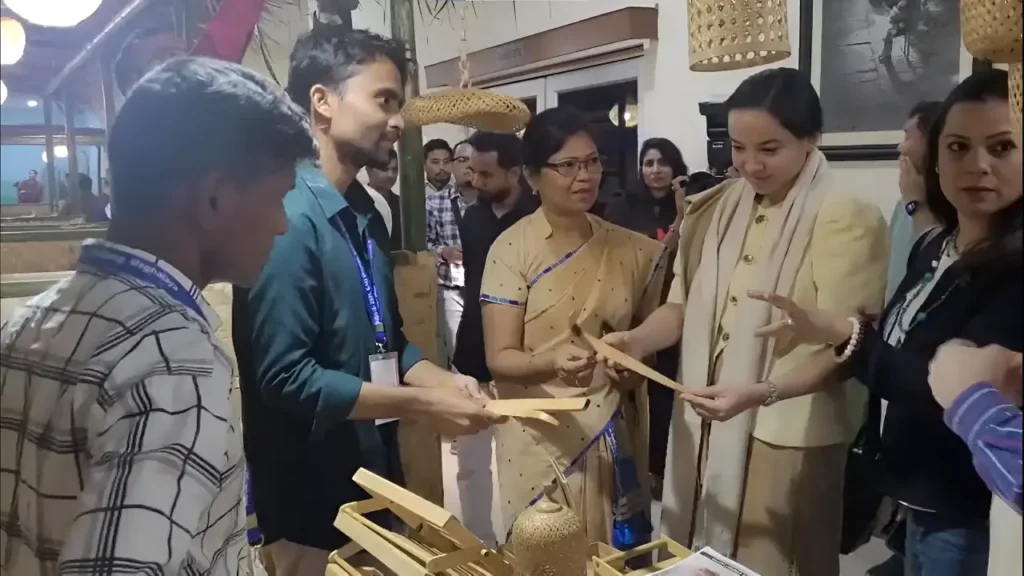
A major initiative aimed at transforming the indigenous and heritage products of Northeast India into globally competitive enterprises through strategic branding, innovation, and improved market access was launched in Tura, Meghalaya, on Saturday.
The National Buyer-Seller Meet-cum-Exhibition on Indigenous and Heritage Products of North East India brought together artisans, entrepreneurs, buyers, investors, researchers, and policymakers on a common platform to strengthen market linkages and create sustainable livelihood opportunities.
Organised at the College of Community Science, Central Agricultural University (Imphal), the event seeks to bridge the long-standing gap between the region’s rich traditional production systems and wider domestic and international markets.
By facilitating direct interaction between producers and buyers, the initiative aims to promote indigenous products as globally recognised brands while ensuring greater value reaches local artisans and communities.
The exhibition also highlighted the Northeast’s rich cultural diversity and traditional craftsmanship, underscoring the growing importance of indigenous knowledge, Geographical Indication (GI) products, and community-led enterprises in driving sustainable economic development. It reflects a broader effort to position the region as a hub for heritage-based industries capable of competing in national and international markets.
Inaugurating the event, Gambegre MLA Dr. Mehtab Chandee A. Sangma urged artisans, startups, and entrepreneurs to look beyond regional markets by combining traditional craftsmanship with modern design, technological innovation, and stringent quality standards.
She said the Northeast possesses immense potential to develop globally recognised brands rooted in its unique heritage, provided stronger market linkages and collaborative ecosystems are created.
Dr. Sangma said the region’s strengths lie in its extraordinary diversity, abundant natural resources, and resilient communities. Supporting indigenous enterprises, she noted, would not only generate economic opportunities but also contribute to biodiversity conservation, cultural preservation, women’s empowerment, and inclusive growth.
Referring to the vision of Viksit Bharat by 2047, she said the Northeast has the potential to pioneer development models that are economically vibrant, environmentally sustainable, and socially inclusive.
Calling for greater collaboration among universities, producers, entrepreneurs, investors, and government institutions, Dr. Sangma stressed the need to build an ecosystem that encourages innovation, eases market access, and ensures fair returns for producers. She expressed confidence that the Buyer-Seller Meet would foster lasting business partnerships while inspiring many local success stories.
The exhibition featured participation from all eight Northeastern states, with 178 registered artisans displaying a wide range of indigenous and heritage products across 72 exhibition stalls.
Visitors also witnessed 15 live demonstration units showcasing traditional skills, crafts, and production techniques, offering buyers and investors an opportunity to engage directly with artisans and gain a better understanding of the value behind the products.
Explaining the rationale behind the initiative, Dr. Jyoti V. Vastrad, Dean of the College of Community Science, said the programme was conceived to address the disconnect between the Northeast’s strong indigenous production base and its relatively limited market reach.
While exhibitions are organised regularly under various government initiatives, she said this platform was specifically designed to bring together artisans, experts, startups, investors, and buyers to facilitate direct business opportunities and create sustainable improvements in artisan livelihoods.
The inaugural session was presided over by Prof. Anupam Mishra, Vice Chancellor of Central Agricultural University (Imphal).
Among the dignitaries present were Satinder Kumar Bhalla, ITS, Secretary of the North Eastern Council; Prof. Dipjyoti Rajkhowa, Vice Chancellor of Assam Agricultural University, Jorhat; Dr. K. M. Bujar Baruah, former Vice Chancellor of Assam Agricultural University; and Ankur Jain, Deputy Inspector General of Police (AP), Assam.