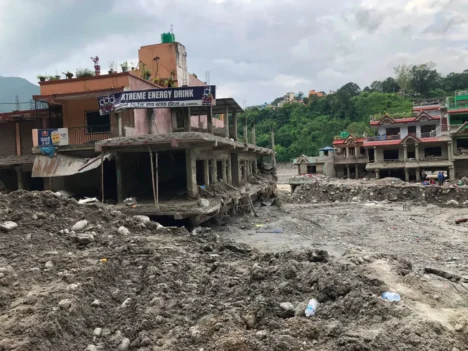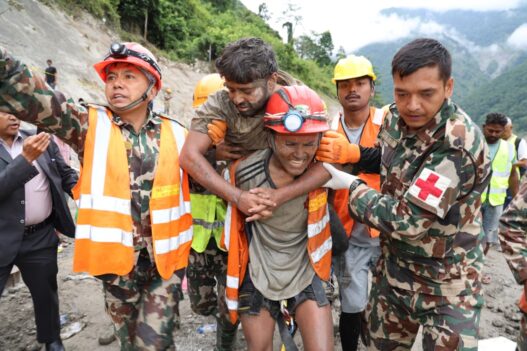

The debate around large multipurpose projects in the Himalayas often focuses narrowly on dams and electricity. But in the case of the proposed Siang Upper Multipurpose Project (SUMP), the discussion must go far beyond hydropower generation. For a downstream region increasingly vulnerable to devastating floods, erratic rainfall, glacial hazards and uncertainty over upstream water flows, the project has the potential to become an important instrument of water security, flood moderation and disaster preparedness.
The Siang is not just another river. It is part of a transboundary Himalayan river system whose upstream developments and hydrological behaviour have direct implications for India. What happens upstream can have serious consequences downstream. This makes the question of managing the Siang’s waters a matter not only of development, but also of strategic and environmental security.
A reservoir can moderate floods
One of the most important functions associated with a multipurpose storage project is flood moderation. During periods of exceptionally high inflow, a reservoir-subject to its design, operating rules and available flood cushion-can temporarily retain a portion of incoming water and regulate its release downstream. It cannot eliminate floods altogether, particularly during extreme events, but it can potentially reduce the suddenness and intensity of flood peaks.
For Assam and other downstream areas, this distinction is critical. The Brahmaputra basin experiences enormous seasonal variations. During the monsoon, intense rainfall, landslides, tributary inflows and sudden hydrological events can combine to produce devastating floods. A well-designed multipurpose project with appropriate flood-management provisions could add an important layer of moderation to the overall river management system.
The key point is not that a dam can “stop” every flood. No responsible engineer or policymaker should make such an absolute claim. Rather, the value lies in the ability to store, absorb and regulate part of an extraordinary inflow, where operationally and technically feasible. In a region repeatedly affected by disasters, even partial moderation of an extreme flood peak can make a meaningful difference.
Water for the dry season
The second major advantage of a storage-based multipurpose project is equally important but often receives less public attention: dry-season water security. The Himalayan rivers present a paradox. There can be an abundance of water during the monsoon and relative scarcity during the lean season. A reservoir creates the possibility of storing water when flows are high and making regulated releases during periods of lower natural flow.
This has implications for downstream communities, agriculture, ecosystems and water availability. With changing rainfall patterns and increasing climate uncertainty, the ability to manage water across seasons is becoming increasingly valuable. A reservoir is, in essence, a strategic water bank-provided it is designed and operated responsibly.
The Siang Upper Multipurpose Project could therefore serve a purpose beyond power generation. It could potentially contribute to a more regulated flow regime during lean periods and provide an additional measure of resilience against increasing hydrological variability. In the future, water management may become as important as energy generation. A project that combines both objectives deserves to be assessed through a much wider lens.
The need for better warning systems
The third dimension is early warning and hydrological monitoring. Large multipurpose projects generally require extensive systems for monitoring rainfall, river inflows, reservoir levels and downstream discharge. These systems can strengthen the overall institutional capacity for forecasting and emergency response.
For downstream populations, timely information is often as important as physical infrastructure. A few hours of advance warning can enable authorities to move vulnerable communities, protect critical assets and prepare disaster-response systems. Better instrumentation and real-time monitoring can therefore become an important component of regional resilience.
This issue acquires greater significance because India does not have complete control over the hydrological information generated in the upstream parts of the transboundary river system. Where upstream data is limited, delayed or unavailable, downstream uncertainty increases. India must therefore strengthen its own capacity to monitor, model and anticipate changes in river behaviour. The SUMP, together with a comprehensive basin-wide monitoring and early warning network, can potentially become part of that larger national strategy. The issue is not simply about constructing a dam. It is about creating a stronger hydrological intelligence and disaster-management architecture for one of India’s most important river basins.
The China factor and strategic water security
The Siang originates in Tibet, where it is known as the Yarlung Tsangpo before entering India. The absence of full and reliable real-time hydrological transparency from upstream areas creates a strategic challenge for downstream nations. In a transboundary river system, information is power-but information can also save lives. Sudden changes in river flow can result from intense rainfall, landslides, glacial events, infrastructure operations or other natural and human-induced factors. Without adequate upstream information, downstream forecasting becomes more difficult.
India cannot afford to remain dependent on uncertainty. This is why the Siang Upper Multipurpose Project must also be viewed through the prism of national security and strategic preparedness. The project could enhance India’s ability to observe and manage water entering its territory, while strengthening infrastructure and monitoring systems in a sensitive Himalayan region. No single project can solve every transboundary water challenge. But doing nothing is not a strategy. India needs its own scientific, technological and infrastructural capacity to understand and respond to the changing behaviour of Himalayan rivers.
The Teesta-III lesson: Infrastructure must learn from disaster
Any discussion on SUMP must also honestly acknowledge the lessons from the Teesta-III disaster. The catastrophic event in Sikkim demonstrated the vulnerability of Himalayan infrastructure to extreme and cascading natural hazards. The disaster raised serious questions about the design assumptions, warning systems, sediment management, extreme-event planning and the risks posed by a rapidly changing Himalayan environment. The lesson from Teesta-III is not that all dams are inherently unsafe or that India should abandon water infrastructure.
The real lesson is more demanding: Himalayan infrastructure must be designed for a new era of extreme uncertainty. Climate change is altering rainfall patterns. Glacial lakes, landslides and extreme weather events are becoming major concerns. Historical data alone may no longer be sufficient to define future risks. Therefore, if the Siang Upper Multipurpose Project is taken forward, it must incorporate the most rigorous standards of safety and resilience.
This means comprehensive geological investigations, updated hydrological modelling, assessment of glacial and landslide risks, robust flood-routing capacity, adequate emergency spillway provisions, real-time monitoring, independent safety reviews and transparent downstream warning systems. The Teesta-III experience should not be ignored. It should become a reason to build better, safer and smarter.
Development with responsibility
The debate on SUMP should not be reduced to a simplistic choice between “development” and “environment.” The real challenge is to achieve development with responsibility. The ecological sensitivity of the Eastern Himalayas, the concerns of local communities and indigenous populations, seismic risks and the environmental consequences of large infrastructure must be taken seriously. Public confidence cannot be built through assurances alone. It requires scientific transparency, meaningful consultation and uncompromising safety standards.
But at the same time, India must recognise the risks of inaction. As climate uncertainty grows and upstream hydrological developments continue beyond India’s borders, the country needs stronger systems to protect its people and manage its strategic water resources. The Siang Upper Multipurpose Project should therefore be evaluated not merely as a hydropower project, but as a potential component of a broader strategy encompassing flood moderation, dry-season water management, early warning, scientific monitoring and national water security.
A project for a changing Himalayan future
The Himalayas are entering an era of unprecedented environmental uncertainty. India’s response must combine ecological sensitivity with technological capability and strategic foresight. If designed with the right safeguards, operated transparently and integrated into a basin-wide disaster-management system, the Siang Upper Multipurpose Project could become more than a source of electricity. It could serve as an important instrument of resilience for downstream communities.
The choice before us is not between nature and development. The real choice is between being prepared and remaining vulnerable. The Siang will continue to flow. The question is whether India will have the scientific infrastructure, storage capacity, warning systems and strategic preparedness necessary to understand its changing moods and protect the millions who live downstream. The Siang Upper Multipurpose Project, if pursued with safety, science, environmental responsibility and public trust at its core, could be an important step towards that preparedness.