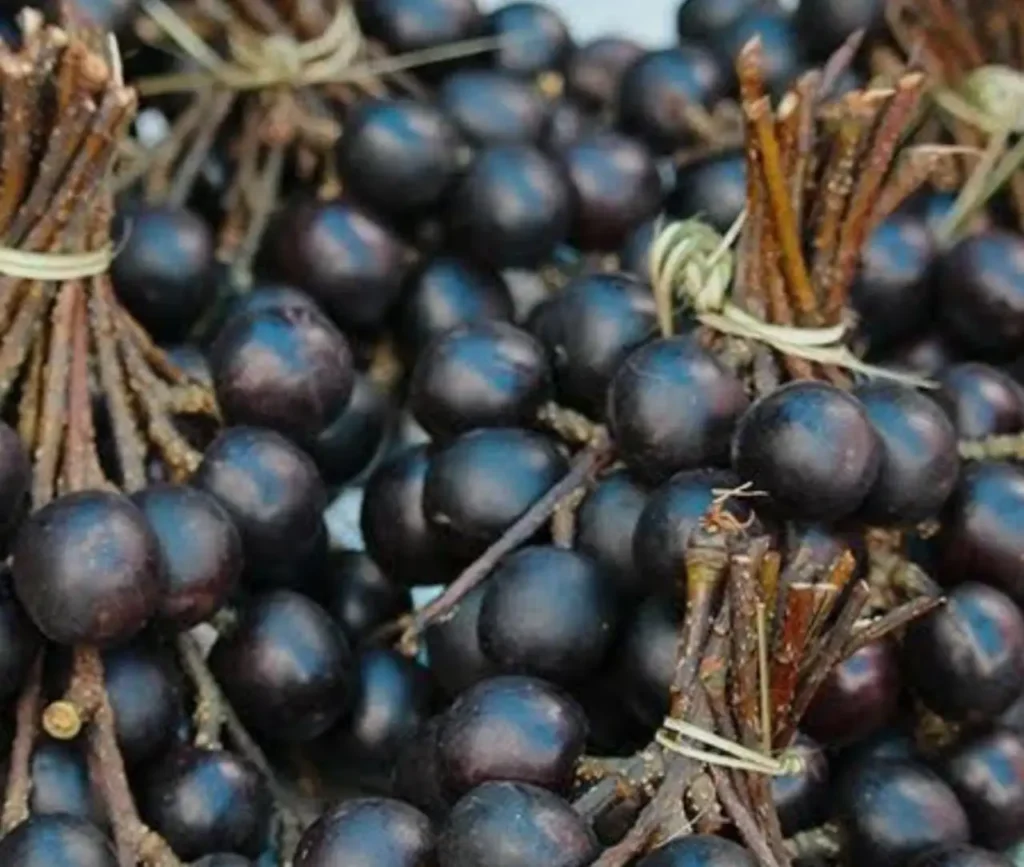
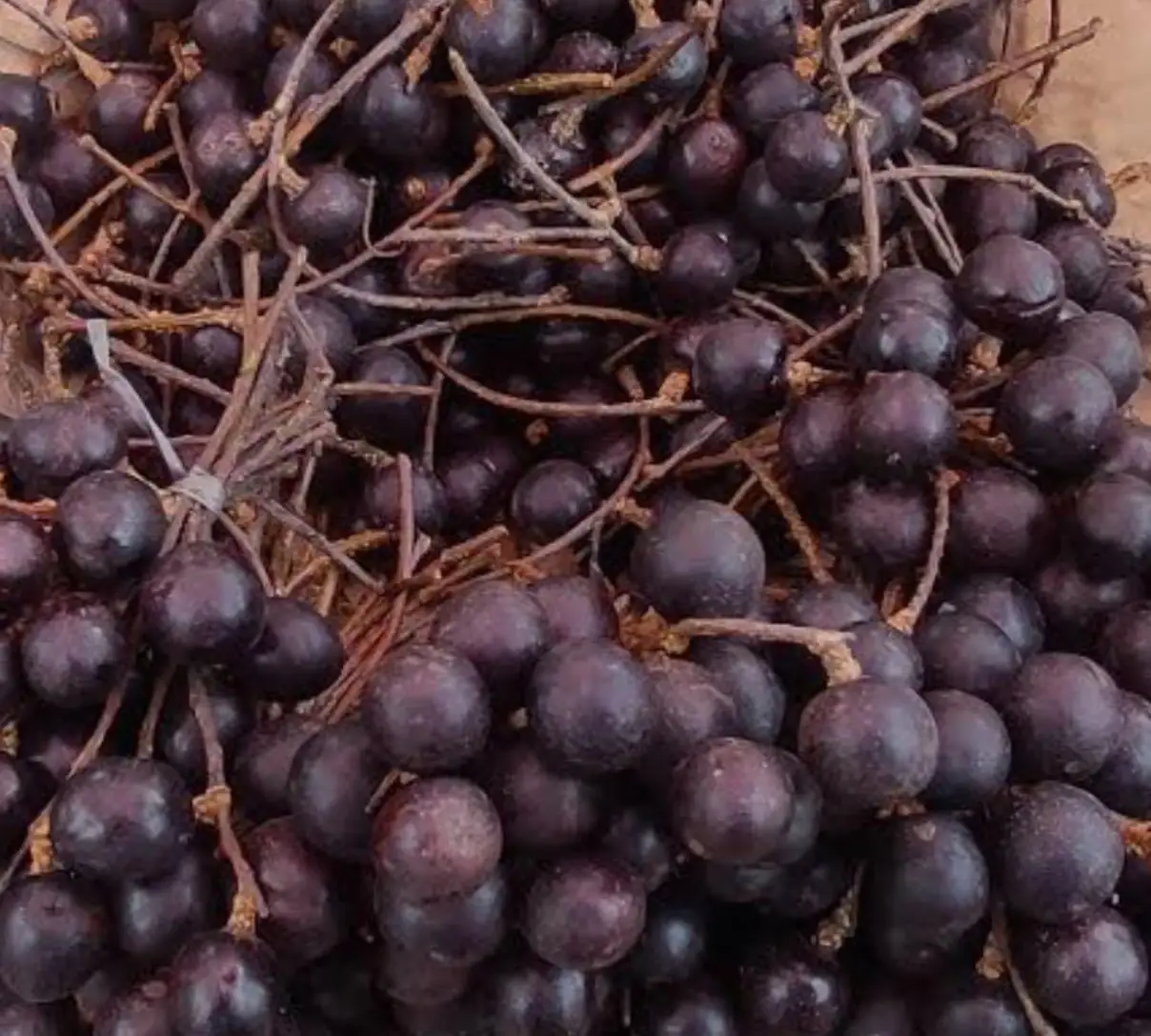
High in the mist-covered hills of Meghalaya, a small, dark-purple fruit is emerging as a promising source of agricultural innovation and rural prosperity. Known locally as Sohiong, this indigenous fruit, scientifically classified as Prunus napaulensis, is gradually moving beyond its traditional place in local markets to become a potential driver of sustainable farming and rural entrepreneurship.
Popularly known as the Himalayan Black Cherry or Khasi Cherry, Sohiong has long been cherished by indigenous communities across the Khasi and Jaintia Hills. Its deep-purple colour, rich antioxidant content and distinctive blend of sweetness and tartness have made it a seasonal favourite for generations.
Today, however, scientific advances in cultivation, processing and preservation are opening new possibilities for a fruit whose commercial potential has remained largely untapped.
The East Khasi Hills district has traditionally been the principal centre of Sohiong production, with the trees thriving along temperate forest slopes and on homestead farmlands. Smaller quantities are also grown or collected across parts of the Jaintia Hills.
Between August and November, when the fruit reaches its peak harvesting season, markets across Shillong come alive with baskets of freshly harvested Sohiong. From Police Bazar and Iewduh to Motphran, vendors display the distinctive purple berries, attracting local residents and curious visitors alike.
Despite its popularity, Sohiong has historically remained an underutilised agricultural resource. While the fruit is consumed fresh and processed into juices, wines, jams and jellies, its wider commercial cultivation has been constrained by several challenges.
Among the most significant has been the tree’s long gestation period. Under natural cultivation conditions, Sohiong trees typically take seven to nine years to begin bearing fruit, making them a less attractive investment for smallholder farmers seeking quicker returns.
The shortage of quality planting material, absence of standardised cultivation practices, limited shelf life and inadequate market linkages have further restricted commercial expansion. Seasonal losses and fluctuating prices have often left growers with little opportunity to realise the fruit’s full economic value.
A major breakthrough has now emerged from the ICAR Research Complex for the North Eastern Hill (NEH) Region at Umiam, where agricultural scientists have been working to overcome these longstanding limitations.
One of their most significant achievements has been the standardisation of tongue-grafting technology, a propagation technique that can reduce the time required for Sohiong trees to bear fruit from seven to nine years to just three to four years.
The development could substantially change the economics of Sohiong cultivation. By shortening the waiting period before the first harvest, the technique offers farmers an opportunity to secure earlier returns, making commercial orchards a more attractive proposition.
The research extends beyond faster fruit production. ICAR scientists have also identified superior Sohiong genotypes, which are undergoing multi-location field evaluations across different microclimatic conditions.
These trials aim to identify varieties with improved productivity, disease resistance and fruit quality, laying the groundwork for more reliable and commercially viable cultivation.
At the same time, researchers are developing organic and natural farming protocols specifically suited to Sohiong. The initiative complements Meghalaya’s broader emphasis on sustainable agriculture while seeking to preserve the ecological advantages of cultivating indigenous fruit species.
While improved cultivation practices promise higher production, preserving the harvested fruit remains equally important.
Fresh Sohiong berries are delicate and highly perishable, making transportation and storage particularly challenging. For farmers in remote highland villages, this has often meant selling their produce quickly or risking substantial post-harvest losses.
To address this constraint, researchers have developed specialised packaging technologies capable of extending the fruit’s shelf life to as much as nine days.
The improvement could provide farmers and traders with valuable additional time to transport their produce to markets beyond Meghalaya, potentially reducing wastage and improving returns.
Parallel research is also examining fruit maturity indices, grading standards and the nutritional and chemical composition of Sohiong. These studies are expected to help establish the quality benchmarks necessary for wider commercial distribution.
Together, these advances could strengthen the fruit’s prospects in regional markets, where consistent quality, reliable packaging and longer shelf life are essential for commercial success.
Beyond cultivation, Sohiong’s versatility is creating opportunities in food processing and value addition, particularly for small-scale rural enterprises.
ICAR has standardised several processing techniques that allow the fruit to be transformed into higher-value products, including fruit leather, concentrated beverages, dried candies, soluble powders and regional wines.
These innovations build upon traditional preparations such as jams, jellies and juices, while introducing products that could reach a wider consumer base.
The fruit’s distinctive colour, rich juice and aromatic flavour have also attracted local entrepreneurs experimenting with premium beverages, including craft gins, artisanal liqueurs and other regional spirits.
Such diversification offers an opportunity to move beyond the seasonal sale of fresh fruit and develop enterprises capable of generating income through processing, packaging and marketing.
For rural communities, particularly women-led enterprises and young entrepreneurs, this emerging value chain could provide new avenues for employment and self-employment.
Recognising that scientific advances must translate into benefits at the grassroots, ICAR is working with the Farmers’ Commission, Krishi Vigyan Kendras (KVKs), state government departments and local farming collectives to expand access to improved planting material and cultivation knowledge.
A central objective of this collaboration is to make quality planting material available to rural growers while encouraging the adoption of improved orchard management practices.
The initiative also seeks to strengthen the wider Sohiong value chain, connecting cultivation with processing, packaging and market distribution.
Particular emphasis is being placed on opportunities for rural youth and women’s self-help groups, whose participation could help establish small enterprises around fruit processing and related agricultural activities.
Such an approach could be especially valuable in Meghalaya’s highland communities, where geographical constraints, fragmented markets and limited livelihood diversification continue to affect rural economic opportunities.
By linking scientific research with local enterprise development, the initiative seeks to ensure that the benefits of improved cultivation extend beyond individual orchards to the wider rural economy.
For generations, Sohiong has been part of Meghalaya’s indigenous food traditions and agricultural biodiversity. Its growing commercial potential now presents an opportunity to combine that heritage with modern scientific innovation.
The advances in grafting, post-harvest preservation, quality assessment and value-added processing could help transform a largely seasonal fruit into a more dependable source of rural income.
Much will depend on the availability of improved planting material, wider adoption of cultivation techniques, investment in processing infrastructure and the development of stronger market linkages.
Nevertheless, the collaborative efforts of ICAR, the Government of Meghalaya, KVKs and farming communities are laying the foundation for a potentially significant shift in the fruit’s economic prospects.
For Meghalaya’s farmers, Sohiong may soon represent more than a familiar seasonal harvest. With the right scientific support and market opportunities, this indigenous purple fruit could become an important contributor to sustainable highland agriculture, nutritional diversity and rural prosperity.
And for a fruit that has long thrived quietly in Meghalaya’s hills, its most promising harvest may still lie ahead.