As public resistance intensifies, the Meghalaya Government faces difficult questions over environmental safeguards, financial priorities and its determination to push ahead with a project that has become increasingly contentious.
The controversy surrounding the Shillong Peak Ropeway Project is no longer simply about constructing a tourist attraction. It has evolved into a larger confrontation over environmental protection, public accountability and the manner in which the Meghalaya Government approaches development in ecologically sensitive areas.
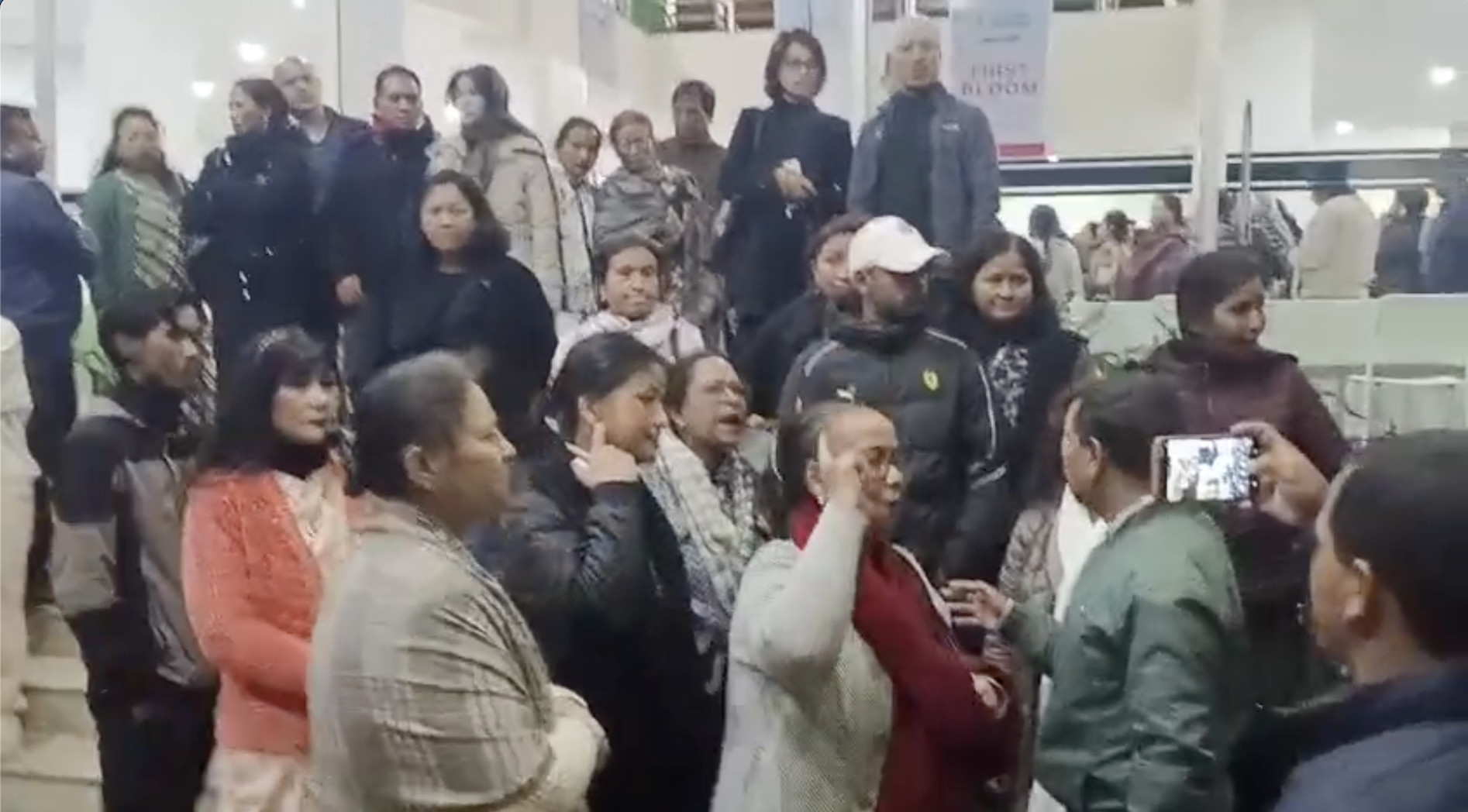
The collapse of yet another consultation, this time involving South Shillong MLA and cabinet minister Sanbor Shullai, has further exposed the widening gulf between the government’s position and the concerns of local communities. What was intended to be an exercise in dialogue ended with the minister walking out amid angry protests, leaving fundamental questions unanswered.
The incident raises a troubling question. If the government is confident that the project poses no significant environmental threat, why has it struggled to convince the very communities whose lives and livelihoods may be affected?
More importantly, why does the government appear so determined to proceed with the project despite sustained resistance, repeated demands for greater transparency and growing concerns about its ecological and financial implications?
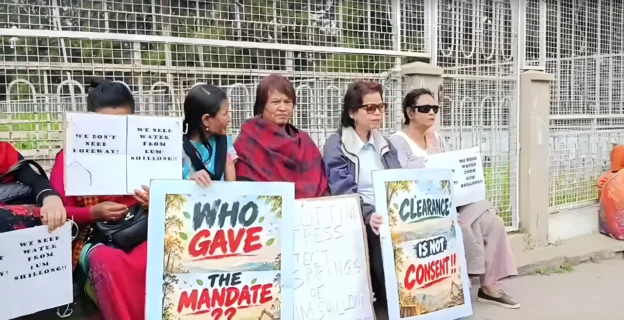
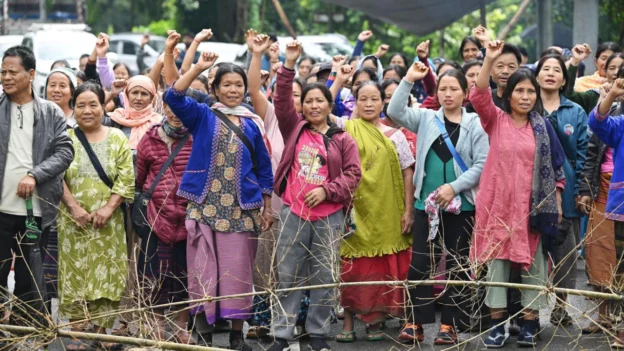
These questions have assumed greater significance because the opposition is no longer confined to a handful of individuals. Women residents, environmental campaigners, civil society organisations and sections of the local community have increasingly challenged both the project and the process through which it was approved.
The recent consultation at the State Convention Centre was expected to provide an opportunity to narrow these differences. Instead, it demonstrated how far the two sides remain from finding common ground.
According to women who attended the meeting, Shullai largely presented the government’s prepared position, allowed limited interventions and ended the proceedings before their concerns could be adequately discussed.
Civil rights activist Angela Rangad accused the minister of undermining the consultation by restricting media access and preventing video recording. She also disputed his allegation that protesting women had disrupted the proceedings, maintaining that the confrontation escalated because the MLA was unwilling to accommodate dissenting views.
Shullai offered a different account. He maintained that representatives of 26 organisations had been invited to discuss a proposal for approaching Chief Minister Conrad K. Sangma and seeking an expert assessment of the project’s possible impact on water sources.
According to him, the meeting became unmanageable because some participants were more interested in creating disturbances than engaging constructively. He also alleged that political opponents and individuals from outside the constituency were involved in the protests.
These competing accounts deserve scrutiny. Yet the more important issue is not who shouted during the meeting or whether the minister was justified in leaving. It is whether the consultation was designed to genuinely reconsider the project or merely secure acceptance of a decision already made.
This distinction lies at the heart of the controversy.
The government has repeatedly defended the ropeway through technical presentations, maps, official clearances and assurances that the alignment will not disturb critical water sources. Shullai reiterated that the six proposed towers would be situated outside the Umiew catchment and that identified springs supplying several Shillong localities were away from the alignment.
He also cited approvals from defence authorities, the Airports Authority of India and the Ministry of Environment, Forest and Climate Change, alongside an earlier No Objection Certificate issued by the local Dorbar Shnong.
These are relevant considerations. However, regulatory approvals and technical assurances do not automatically settle questions about the wider environmental consequences of a project, particularly when the affected communities continue to dispute the adequacy of earlier consultations.
As previously reported by The Borderlens, Joint Action Committee secretary Dr Linda Marbaniang has questioned whether residents were sufficiently informed before construction activities began. She maintained that public opposition intensified after machinery arrived and trees were felled, prompting residents to investigate the project’s documentation and environmental implications.
The issue is therefore not simply whether official procedures were followed, but whether those procedures provided meaningful opportunities for public participation.
There is also a difference between demonstrating that a ropeway tower does not stand directly over a natural spring and establishing that construction will have no adverse impact on the surrounding hydrological system.
Environmental concerns extend beyond the immediate footprint of the towers. Tree removal, soil disturbance, changes in surface runoff, groundwater recharge and increased human activity can have consequences across a wider landscape. The extent of such risks requires independent scientific assessment rather than competing assertions.
The government has maintained that environmental and social impact assessments were undertaken and reviewed by experts. It has also argued that the ropeway alignment was modified to minimise tree felling and that the project would ultimately reduce vehicular pollution around Shillong Peak.
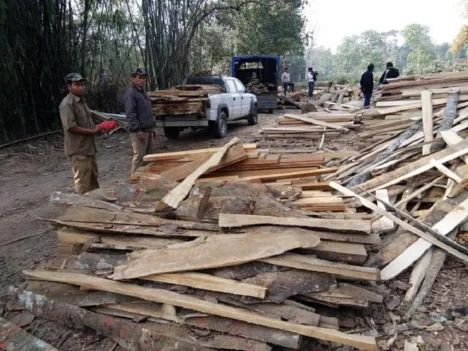
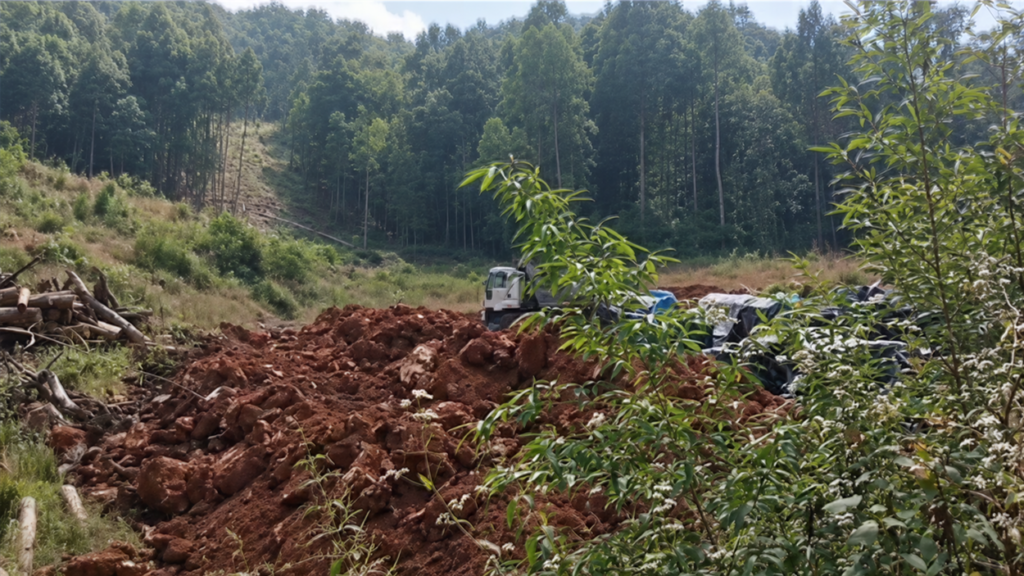
Nevertheless, the reported felling of 545 trees has become a powerful symbol of the environmental costs associated with the development. For residents concerned about declining water availability and the deterioration of Shillong’s surrounding hills, assurances of compensatory afforestation do not necessarily address the immediate loss of mature forest cover.
This is where the government’s position requires closer examination.
If the project has already undergone comprehensive environmental assessment, why is an additional expert committee now being proposed to examine whether it could compromise local water sources? Would such an assessment have the authority to recommend substantial modifications, relocation or even cancellation if serious risks were established?
Alternatively, is the proposed committee intended merely to reinforce the government’s existing conclusions?
The answers are important because public confidence cannot be restored through another round of presentations unless the findings are independently verifiable and capable of influencing the project’s future.
The financial dimension raises equally significant questions.
The Shillong Peak Ropeway is estimated to cost approximately Rs 151 crore, with funding comprising about Rs 80.89 crore from the New Development Bank and Rs 70.11 crore under the Centre’s PM-DevINE scheme.
Rangad has questioned the wisdom of financing such a venture through borrowed funds, arguing that the government should prioritise infrastructure that directly strengthens local livelihoods and essential services.
Her criticism points towards a broader debate about development priorities in Meghalaya.
There is little dispute that tourism can generate employment and economic opportunities. Shullai has argued that the ropeway could benefit local vendors, taxi operators and young people seeking technical and non-technical employment.
But these anticipated benefits need to be examined against the project’s capital cost, long-term maintenance obligations, financial viability and potential environmental consequences.
What are the projected annual passenger numbers? What revenue is expected from ticket sales? How much will the ropeway cost to operate and maintain? What proportion of the anticipated economic benefits will reach surrounding communities?
And, perhaps most importantly, has the government publicly demonstrated that the expected economic returns justify the investment?
The availability of external financing should not, by itself, determine whether a project deserves priority. Nor should the promise of tourism-related employment substitute for a transparent assessment of costs, risks and alternatives.
There is also the question of whether a ropeway represents the most appropriate intervention for improving access to Shillong Peak when road connectivity already exists.
The government’s argument that the project could reduce vehicular traffic and pollution deserves consideration. However, that claim should be supported by realistic projections of how many visitors would shift from road transport to the ropeway, whether tourist traffic through adjoining neighbourhoods would increase and how the broader ecological footprint would change.
Without such information being placed in the public domain, the economic and environmental justification remains open to challenge.
Another dimension of the controversy concerns the role of local traditional institutions.
The government and Shullai have referred to the consent provided by the Raid Laban Dorbar Pyllun and earlier consultation exercises. Protesters, however, have questioned whether all affected localities were adequately represented and informed.
This disagreement cannot be dismissed as a procedural technicality.
In Meghalaya, where traditional institutions play an important role in local governance, questions of representation, transparency and community consent carry considerable significance. An NOC issued by a recognised authority may establish an important element of procedural approval, but it does not necessarily resolve concerns raised by residents who believe their interests were overlooked.
The government must therefore explain how consent was obtained, who participated in the consultations and whether communities beyond the immediate project site were adequately included.
The controversy has also acquired an institutional dimension following objections raised by the Khasi Hills Autonomous District Council over alleged deficiencies in local permissions and licensing. The subsequent confrontation between the council’s enforcement authorities and the Tourism Department has further complicated the government’s position.
Such disagreements raise questions about coordination between institutions responsible for development, environmental regulation and local governance.
Against this backdrop, attempts to characterise the protests primarily as politically motivated risk diverting attention from the substantive issues.
Shullai specifically referred to former electoral contestants, including Venetia Mawlong and another individual associated with KHNAM, while suggesting that political opponents were seeking to undermine the project.
Political affiliations may be relevant to understanding the wider dynamics of a public campaign. They do not, however, invalidate environmental concerns or relieve the government of its obligation to answer legitimate questions.
Even if some protesters have political associations, does that make their concerns about water security, ecological degradation or public expenditure any less deserving of examination?
The prominence of women in the movement also warrants attention.
As The Borderlens recently reported, women residents have emerged at the forefront of the campaign to protect Lum Shyllong, expressing fears about the consequences of environmental degradation for household water security and future generations.
Their mobilisation suggests that the controversy has moved beyond conventional political opposition into questions of everyday survival and community responsibility.
The government’s response to such concerns should be measured not by how many consultation meetings it organises, but by whether those consultations produce meaningful engagement and demonstrate a willingness to reconsider decisions.
To its credit, the Tourism Department has continued to offer dialogue and has reiterated that its environmental assessments and technical findings are available for public scrutiny. It has also maintained that the project will create livelihood opportunities while incorporating safeguards to minimise ecological damage.
Yet the persistence of protests, the breakdown of consultations and the growing involvement of civic organisations suggest that official assurances have not translated into public confidence.
The government increasingly finds itself defending the project rather than building a convincing public case for why it should proceed.
This defensive posture is perhaps the most revealing aspect of the controversy.
A development initiative that was presumably conceived to strengthen Meghalaya’s tourism infrastructure has instead become a source of political confrontation, institutional disagreement and public distrust.
Something is clearly amiss when repeated explanations fail to reassure residents, when consultation meetings end in confrontation and when the government’s principal response appears to be a reiteration of approvals already obtained.
This does not establish that the project is environmentally unsound or financially unviable. But it does suggest that the government has yet to adequately resolve the questions surrounding its necessity, public acceptance and long-term consequences.
The immediate challenge before Chief Minister Conrad K. Sangma’s government is therefore not simply to defend the ropeway or manage the protests. It is to demonstrate that the project remains justified on environmental, economic and public-interest grounds.
That would require making the relevant assessments and financial projections accessible, allowing credible independent scrutiny and establishing whether alternatives, including relocation, have been seriously examined.
Most importantly, the government must be prepared to accept that meaningful consultation may produce conclusions different from those it originally anticipated.
The Shillong Peak Ropeway controversy has become a test of how development decisions are made in Meghalaya and whether public participation is treated as a substantive democratic process or a procedural requirement to be completed.
For the women and residents opposing the project, the issue is not merely the preservation of a familiar landscape. It is the protection of an ecological system that sustains their communities and whose degradation, once it occurs, may prove difficult to reverse.
The government may possess the authority and institutional backing to proceed. What it has not yet convincingly demonstrated is that pressing ahead, in the face of unresolved public objections, represents the most responsible course.
Ultimately, the question confronting Meghalaya is no longer whether a ropeway can be constructed at Shillong Peak. It is whether it should be constructed at this location, at this cost and under circumstances where public trust has been so visibly eroded.
Until those questions are answered, the government’s determination to push ahead will continue to invite scrutiny rather than confidence.